Stairlifts
How Do Stairlifts Work? A Guide for Homeowners
On this page
- How stairlifts work
- Parts of stairlifts and what they do
- Stairlift speed and installation
Connect with the best stairlift pros in your area.

The Modernize Mission
We help homeowners make confident decisions through our reliable, up-to-date, and unbiased information and average project costs. All of our content is thoroughly reviewed and fact-checked by our team of home improvement experts. Learn more about how we maintain these values.
How Do Stairlifts Work?
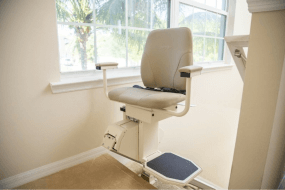
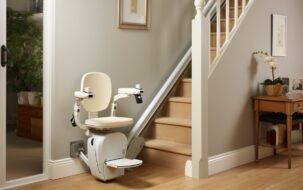
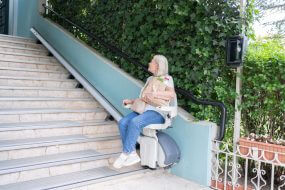
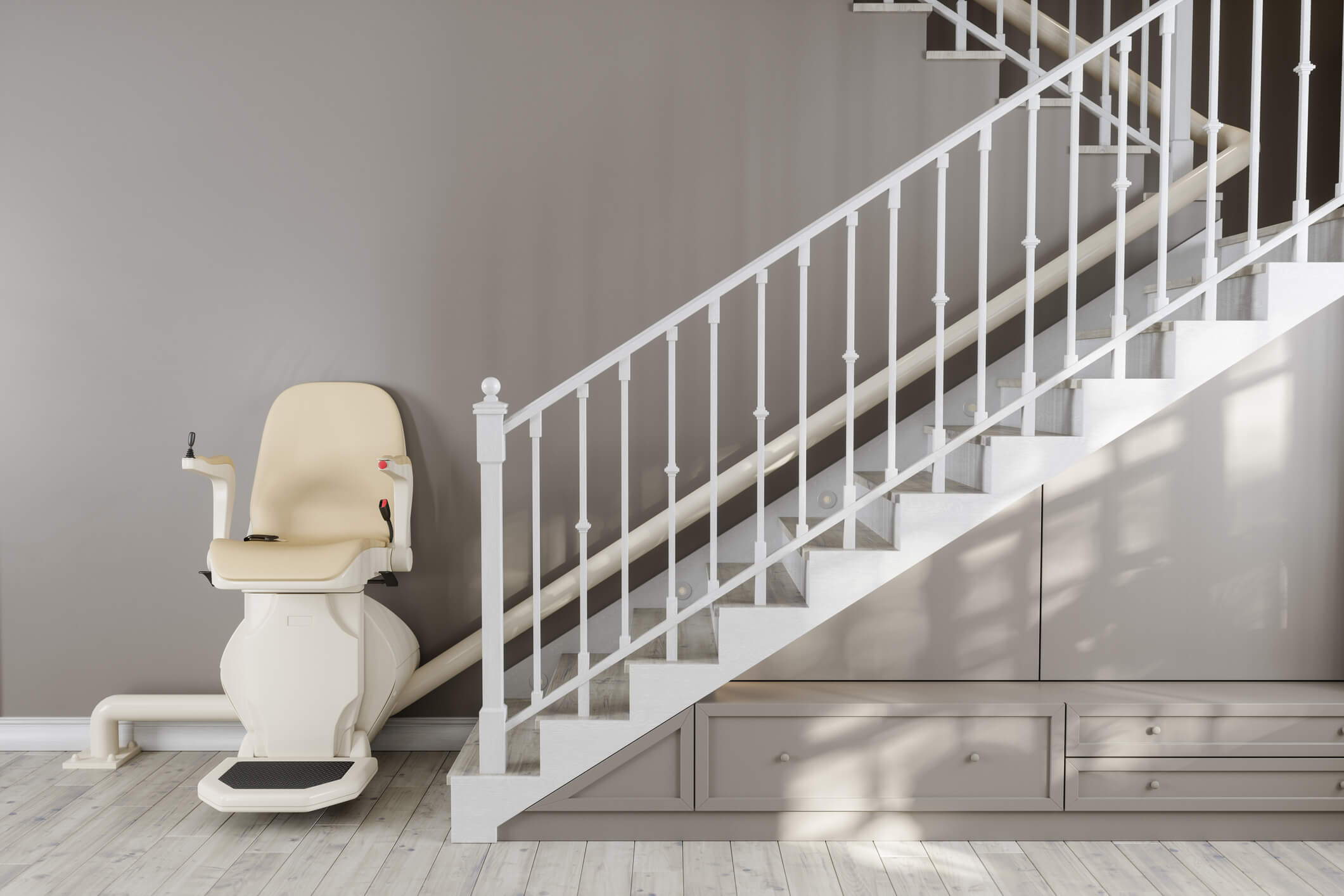
A stairlift is a motorized chair that moves along a rail attached to the steps, helping users travel safely between floors without needing to climb or go down the stairs themselves. The chair sits on a carriage, which is the part that holds the motor, batteries, and drive system. This carriage glides smoothly along the rail, carrying the chair from the bottom to the top of the stairs and back.
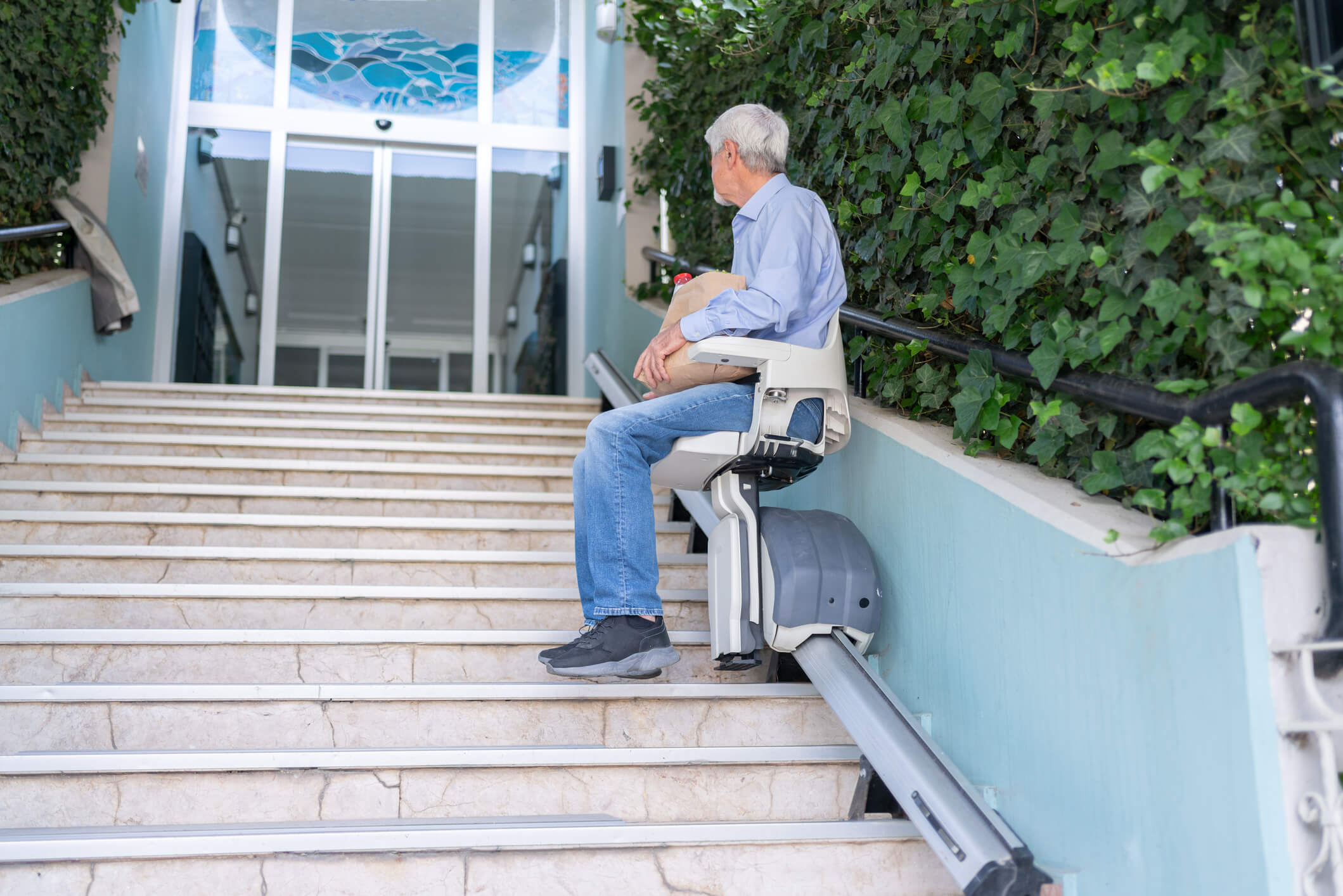
Using a stairlift is simple. You sit down, fasten the seat belt, and use a joystick or switch to choose your direction. The lift moves at a steady speed, slows down as it nears the end of the rail, and stops at the landing. At the top, the seat turns to face the landing so you can get up safely without stepping back onto the stairs.
Parts of a Stairlift
Understanding the main components helps you evaluate models and know what to ask about when comparing options.
Rail
The rail supports the stairlift and runs the full length of your stairs, guiding the carriage and chair from bottom to top. Many people think the rail attaches to the wall, but it actually typically bolts to the stair treads. This spreads the weight across the stairs and means you do not have to change your walls.
For straight staircases, rails come in standard lengths and are cut to fit during installation. If your stairs have bends, turns, or landings, the rail is custom-made to fit your staircase. That is why curved stairlifts cost more and take longer to install.
Most modern rails have a toothed gear rack along their length, which the drive system uses to move the carriage up and down. Some brands hide the gear rack inside the rail for a cleaner look and easier cleaning.
Carriage
The carriage is the motorized part that moves along the rail. It holds the motor, drive mechanism, batteries, and main circuit board. The chair frame attaches to the carriage. This is the heaviest part of the system and does most of the work.
Motor and Drive System
The motor is inside the carriage and powers the lift. Most modern stairlifts use a rack-and-pinion drive system. A toothed gear wheel, called the pinion, on the carriage fits into the toothed rack on the rail. When the motor turns the pinion, it moves the carriage up or down. Changing the motor’s direction changes the direction of travel.
Rack-and-pinion is the standard because it gives precise speed control, works well on slopes, and fits both straight and curved rails. Some brands use sealed gearboxes that never need oiling, which makes maintenance easier. The older cable drive system is now mostly outdated for home stairlifts.
The motor runs on 24 volts of direct current (DC) power, supplied by two 12-volt batteries inside the carriage.
Batteries and Power
Most modern stairlifts run on batteries, but they stay plugged in. A regular 120-volt wall outlet powers a trickle charger in the rail. When the chair is parked at the top or bottom, charging contacts recharge the batteries automatically. The motor uses battery power, not power directly from the outlet.
This setup has a big advantage: the stairlift still works during a power outage. The batteries usually hold enough charge for 20 to 60 trips, depending on the model, which is enough for most outages.
Seat
The seat is where you will notice the biggest design differences between brands. Most models have a padded seat and backrest, padded armrests, a footrest, and a seat belt. Higher-end models offer extra features like:
- Swivel seat: Turns at the top and bottom of the stairs so you face the landing for a safe exit. This is standard on most modern stairlifts.
- Power swivel: The seat turns automatically when you press a button, so you do not have to turn it by hand. This is helpful for people with limited upper body movement.
- Adjustable seat height: Lets you raise or lower the seat to make standing up easier. This is especially helpful after hip replacement.
- Power folding footrest and armrests: These fold up automatically when not in use, keeping the stairs clear and saving you from having to bend down.
Controls
The primary control on most stairlifts is a rocker switch or joystick mounted on the armrest. Pressing or pushing it in one direction moves the lift up. The other direction moves it down. Releasing the control stops the lift immediately.
Most models also come with handheld or wall-mounted remotes. These let another person call the chair to them or send it away. This is helpful in homes where more than one person needs to use the stairs on their own.
Safety Sensors
Obstruction sensors are placed on the footrest and along the carriage. If a sensor finds anything on the stairs, like a pet, a bag, or a person, the lift stops right away. It will not start again until the path is clear and you use the control.
Limit switches at each end of the rail stop the carriage precisely at the correct position and prevent it from traveling off the track.
Get connected with stairlift pros in your area for recommendations and cost estimates.
How Stairlift Safety Works
Stairlifts sold in the U.S. are tested to meet ASME A18.1, the American Society of Mechanical Engineers safety standard for vertical and inclined wheelchair lifts and stairway chairlifts. Beyond the standard, reputable manufacturers build in multiple independent safety layers:
Seat Belt
A lap belt, which works like a car seat belt, is standard on all stairlifts. Some models have a seat belt interlock that stops the lift from moving until the belt is fastened.
Obstruction Sensors
Infrared or pressure sensors on the footrest and carriage stop the lift the moment they detect anything in the path of travel.
Soft Start and Stop
The lift accelerates gradually at the start of a trip and decelerates before stopping. This prevents jarring movements that could unsettle the user.
Swivel Lock
At the top of the staircase, the seat swivels to face the landing and locks in position before the user stands. This prevents the chair from rotating back toward the staircase while the user is transferring.
Limit Switches
Hard stops at each end of the rail prevent the carriage from traveling past its intended endpoint.
Overload Sensor
An alert stops the lift from operating if the user’s weight exceeds the model’s rated capacity, protecting both the user and the equipment.
Learn about the best high-capacity stairlifts in our guide.
Battery Backup
As mentioned earlier, the battery system keeps the lift working during power outages. This is an important safety feature for people who need the stairlift to reach a bedroom or bathroom.
Key Switch
Most stairlifts include a key that can be removed to prevent use by unsupervised children or, in some situations, adults with cognitive impairment.
Stairlift Speed: What to Expect
Stairlifts are made to move slowly, usually between 15 and 40 feet per minute depending on the model. On a typical staircase with 12 to 14 steps, it takes about 30 to 60 seconds to go from bottom to top. This slow, steady speed is intentional because it is safer and more comfortable. The soft start and stop features are set for this speed range.
You cannot adjust the speed on most home stairlifts. Commercial or heavy-duty models may offer a wider speed range.
How to Decide If a Stairlift Is Right for You
A stairlift is the right solution for some people, but not for everyone. Answering these questions can help you decide if it is a good fit for you.
1. Independence
Can you sit down and stand up from a chair on your own, or with just a little help?
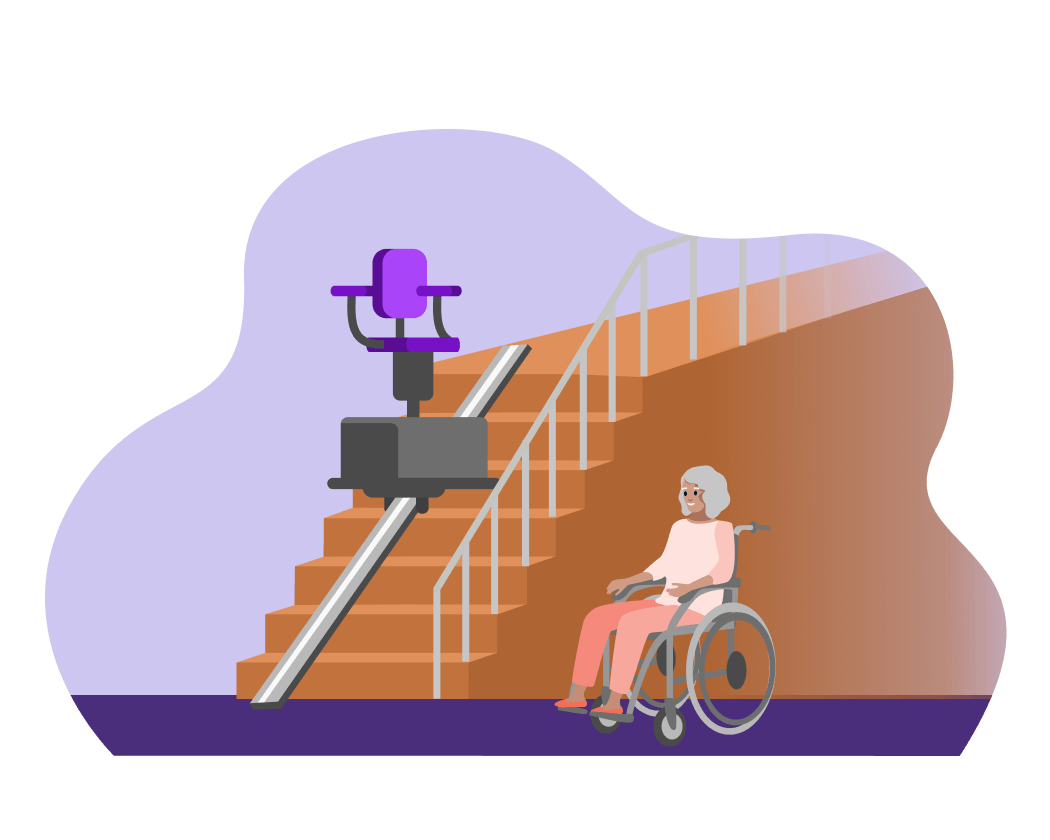
If so, you can probably use a standard seated stairlift. If you need someone to help you get in and out of the seat every time, a stairlift may add a dependency instead of removing one. In that case, a platform lift or home elevator, which can fit a wheelchair, may be a better choice.
2. Mobility Challenges
Is your main challenge with the stairs, or do you have trouble moving around on the same floor too?
A stairlift only solves the stair problem. If you have bigger mobility challenges on both floors, a stairlift might just be one part of the changes you need at home.
3. Staircase Width
What is the width of your staircase?
Most standard seated stairlifts require a minimum of 28 to 29 inches. Narrower staircases may be served by slimmer-profile models or perch configurations. Have a dealer measure before assuming a stairlift will not fit. See our Stairlifts for Narrow Stairs guide for model-specific guidance.
4. Usage Length
Is your need short-term or long-term?
If you only need a stairlift for a short time, like after surgery or for temporary mobility issues, renting might be better. Rental units are usually reconditioned straight models and cost $50 to $200 per month from some dealers.
5. Other Household Members
Who else uses the stairs?
If other people in your home use the staircase often, the space the stairlift takes up when parked is important. Look for models with a narrow folded width, and if the bottom of the stairs is tight, consider an automatic folding rail that moves out of the way.
For a complete guide to evaluating your options, see our Stairlift Buying Guide.
How Stairlift Installation Works
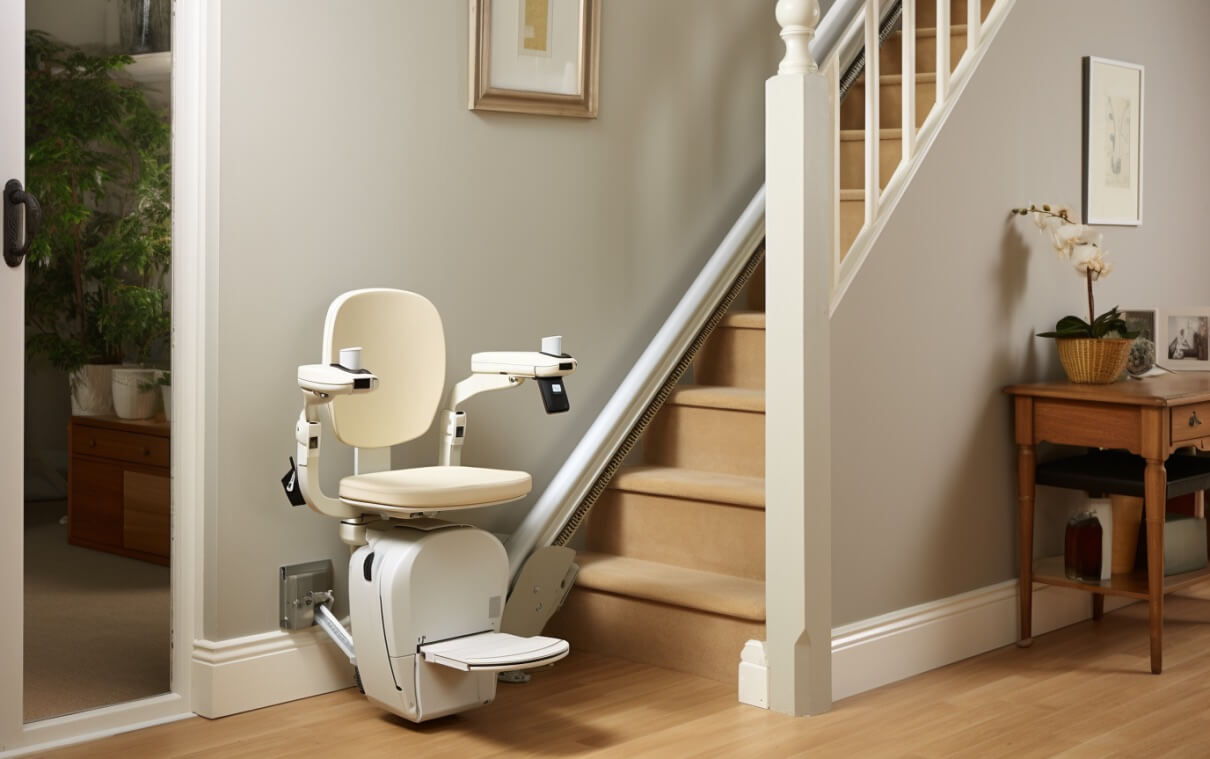
A straight stairlift can usually be installed in one day, often in just two to four hours. You do not need to make any structural changes to your home, and most places do not require a permit. Here is what happens during installation:
- Site survey: A technician measures your staircase, checks that it is wide enough, finds the best outlet for the charger, and looks at the top and bottom landings to make sure there is room for the seat to swivel. For curved stairlifts, they take exact measurements to make the custom rail.
- Rail installation: The rail is secured to the stair treads using brackets and bolts. For straight models, the rail is cut to length on-site. No wall anchors are used.
- Carriage and seat fitting: The carriage slides onto the rail, and the seat is attached. The installer connects the charger to the nearest 120-volt outlet.
- Testing and user orientation: The technician checks that everything works, including movement, sensors, and the swivel lock. You and your family are shown how to use the controls, fold the seat, and use the emergency stop.
For curved stairlifts, the rail arrives already made to fit your stairs. The installation steps are the same, but fitting the rail takes longer and is more precise.
Connect with the top stairlift installers near you to get quotes and compare prices.