Stairlifts
Stairlifts for the Elderly: A Complete Buying Guide
A stairlift can help older adults stay in their homes when stairs become hard or unsafe to use. This guide explains what elderly buyers and their families should know, including how stairlifts work, important features, costs, installation, and payment options.
Connect with the best stairlift pros in your area.

The Modernize Mission
We help homeowners make confident decisions through our reliable, up-to-date, and unbiased information and average project costs. All of our content is thoroughly reviewed and fact-checked by our team of home improvement experts. Learn more about how we maintain these values.
Table of Contents
- Is a Stairlift Right for the Elderly?
- Stairlift Features That Matter Most for Elderly Users
- Best Stairlifts for the Elderly
- Types of Stairlifts for Elderly Homes
- What Do Stairlifts Cost for Seniors?
- Does Medicare Cover Stairlifts?
- How Long Does a Stairlift Last?
- Stairlift Installation: What to Expect
- When Is a Stairlift Not Enough?
- FAQs About Stairlifts for the Elderly
Is a Stairlift Right for the Elderly?
A stairlift works well for older adults who can walk short distances on flat surfaces but have trouble with stairs because of joint pain, balance problems, shortness of breath, or tiredness. However, it is not right for everyone. Before buying, think about these points:
You can likely use a stairlift if you:
- Can sit down and stand up from a chair with minimal assistance.
- Have enough hand or wrist strength to operate a joystick or rocker switch, or can use a remote control as an alternative.
- Can maintain a seated position for the duration of the ride.
- Are dealing with a stable condition such as arthritis, chronic obstructive pulmonary disease (COPD), hip replacement recovery, or general age-related mobility decline.
A stairlift may not be appropriate if you:
- Cannot safely get in and out of the seat without help from another person. In this case, a platform lift or home elevator may be a better choice.
- Have advanced dementia and cannot reliably use the controls or remain seated safely without supervision.
- Have a condition that is getting worse quickly. In this situation, it is important to think about long-term accessibility needs before making a decision.
A stairlift can be safe for someone in the early stages of dementia, especially if a caregiver is present. Simple joystick controls, automatic seat belt locks that prevent movement until fastened, and sensors that detect obstacles all help make use safer. As dementia gets worse, using a stairlift alone becomes riskier, so decisions should be made with the person’s care team.
Key Insights:Leaf Home Comfort, Bruno Elite, and Harmar SL600 are among the best stairlifts for seniors. |
Stairlift Features That Matter Most for Elderly Users
Not every stairlift feature matters equally for older adults. These features make a real difference in daily use:
Swivel Seat
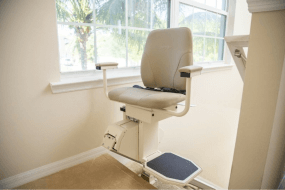
The seat turns at the top and bottom of the stairs so the user can stand up facing the landing, not the staircase. This is standard on most modern stairlifts, but make sure it’s included. Stepping off sideways or backward at height is unsafe.
Power Swivel vs. Manual Swivel
With a manual swivel, the user turns the seat themselves. A power swivel turns the seat automatically with the push of a button. For seniors with arthritis in their hands, wrists, or shoulders, the power swivel is worth the extra cost, usually $500 to $1,000 more, because it makes getting on and off the lift easier.
Seat Belt Design
Stannah’s lap belt design, which clicks into a holder across the lap and requires only one hand to operate, is widely cited as one of the most accessible options for users with limited dexterity. Traditional click-in seat belts similar to car seat belts can be difficult for arthritic hands.
Armrest-Mounted Controls
Controls built into the armrest are easier to locate without looking and reduce the cognitive load of operating the lift. Some models also include a remote call-send unit so a family member on a different floor can send or retrieve the chair.
Obstruction Sensors
Sensors on the footrest and carriage stop the lift automatically if something is on the stairs, such as a pet, a bag, or a person. This feature is especially important in homes with more than one person.
Battery Backup
Most good stairlifts use rechargeable batteries and can make 20 to 60 trips during a power outage, depending on the model. This is an essential safety feature for elderly users who need the lift to reach their bedroom or bathroom.
Folding Footrest and Armrests
When not in use, the footrest and arms fold up to keep the stairs clear for others. Some models fold automatically, while others fold by hand. For people with limited reach or grip, power folding is a useful upgrade.
Adjustable Seat Height
Taller users or those recovering from hip surgery benefit from a higher seat, which makes standing up easier. Some models offer this as a fixed-height option from the factory, while others can be adjusted after installation.
Best Stairlifts for the Elderly
There is no one stairlift that is perfect for every older adult. The best choice depends on your staircase, your physical needs, and what is most important to you. However, these five models are especially good for elderly users because of their ease of use, safety features, strong warranties, and long-term reliability.
Leaf Home Comfort Stairlift: Best for Simplicity and End-to-End Service
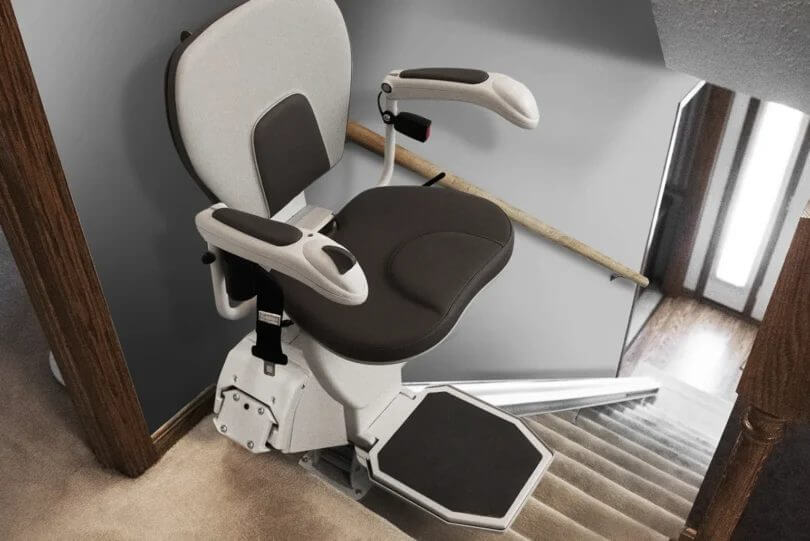
Best for: Elderly buyers who want one company to handle everything, including the sale, installation, service, and warranty, without having to deal with a dealer network.
The Leaf Home Comfort Lift is based on the Harmar SL600 platform, so it has one of the narrowest folded profiles at 10.5 inches and can hold up to 350 pounds.
It’s a good choice for seniors because Leaf Home handles the sale, installation, and service directly through its own technician network, not independent dealers. This means you always know who to contact if there’s a problem. The lift comes with a limited lifetime warranty on the frame and a battery backup for up to 60 trips.
Pricing is given after an in-home consultation.
Weight capacity: 350 lbs. | Minimum staircase width: 29 inches | Estimated installed cost: $3,000 to $5,000
Bruno Elite SRE-2010: Best Warranty and Weight Capacity
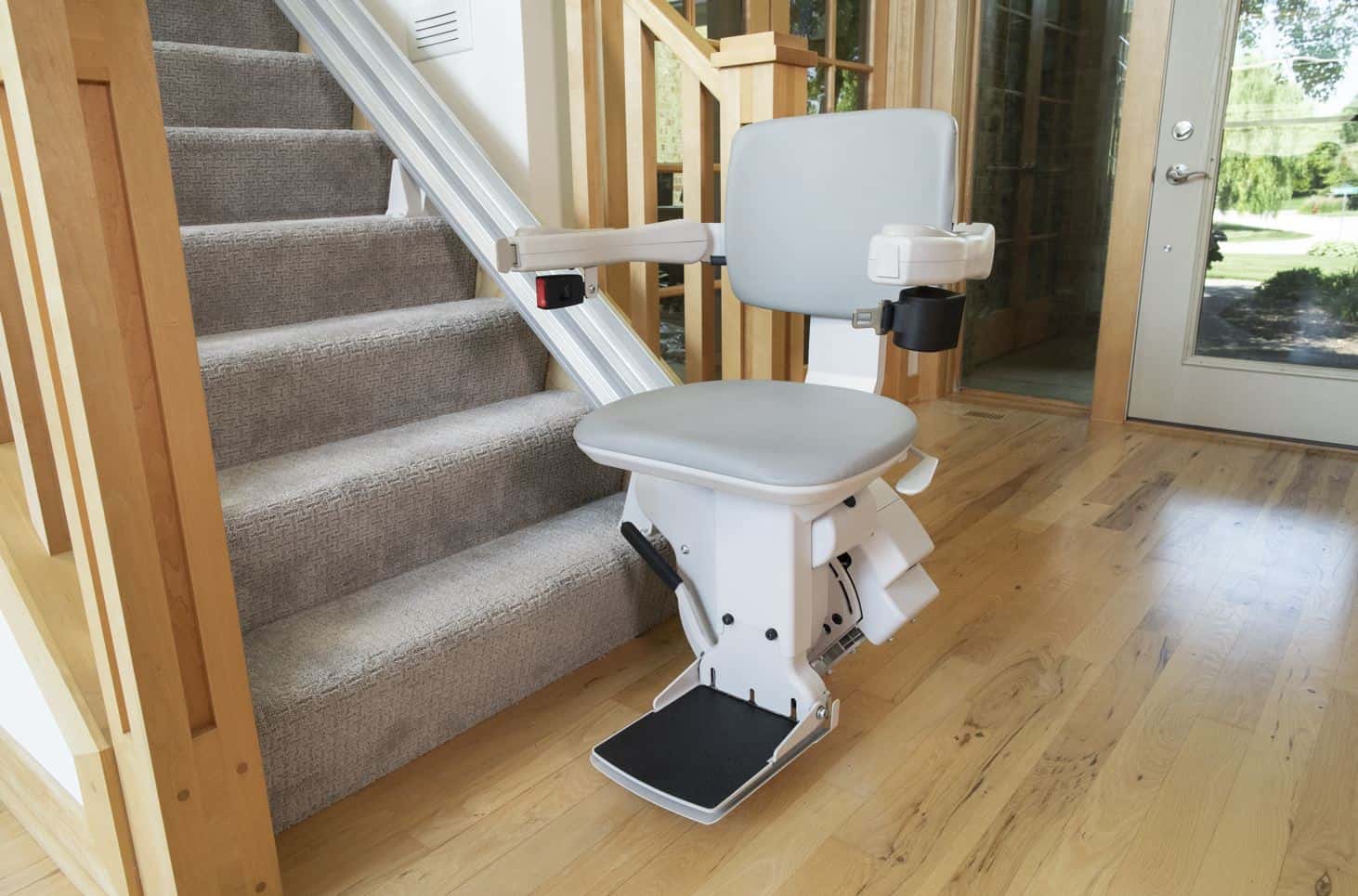
Best for: Elderly buyers who want maximum build quality, the strongest warranty in the category, and a higher weight capacity without stepping up to a heavy-duty model.
The Bruno Elite is the top straight stairlift in Bruno’s lineup and is a great choice for older adults who plan to use a stairlift daily for many years.
It supports 400 pounds, more than most similar models, and comes with a limited lifetime warranty on the motor, gearbox, and rail for the original owner, plus two years on other parts. The vertical rail sits close to the wall, keeping the staircase more open than horizontal rails.
Helpful upgrades for seniors include the power swivel seat, so no manual turning is needed, and the power folding footrest, so no bending is needed.
Weight capacity: 400 lbs. | Minimum staircase width: 28 inches | Estimated installed cost: $4,000 to $6,500
Harmar SL600: Best Compact Footprint
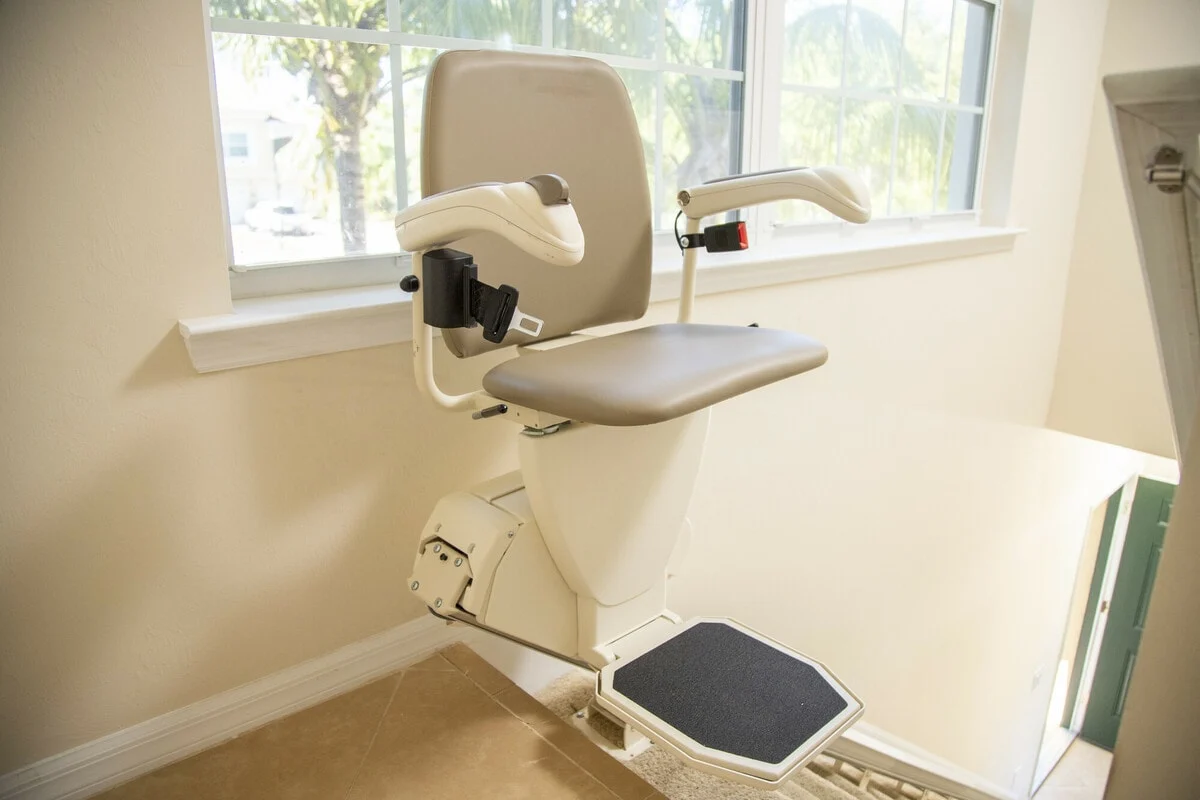
Best for: Elderly buyers with narrower staircases, or households where multiple people share the stairs and need maximum passing room.
The Harmar SL600 has the slimmest folded profile of any standard seated stairlift at 10.5 inches. Its rail sits just 1 inch from the wall and is only 3 inches tall when installed, so it leaves more open space on the stairs than most other models.
It supports 350 pounds, more than the 300-pound standard for many straight lifts. The SL600 uses a helical worm gear drive that does not need lubrication, which is helpful for seniors who will not be doing their own maintenance. The battery backup allows up to 60 trips per charge.
Weight capacity: 350 lbs. | Folded width: 10.5 inches | Minimum staircase width: About 28 to 29 inches | Estimated installed cost: $3,500 to $5,500
Acorn 130: Best for Arthritis and Ease of Use
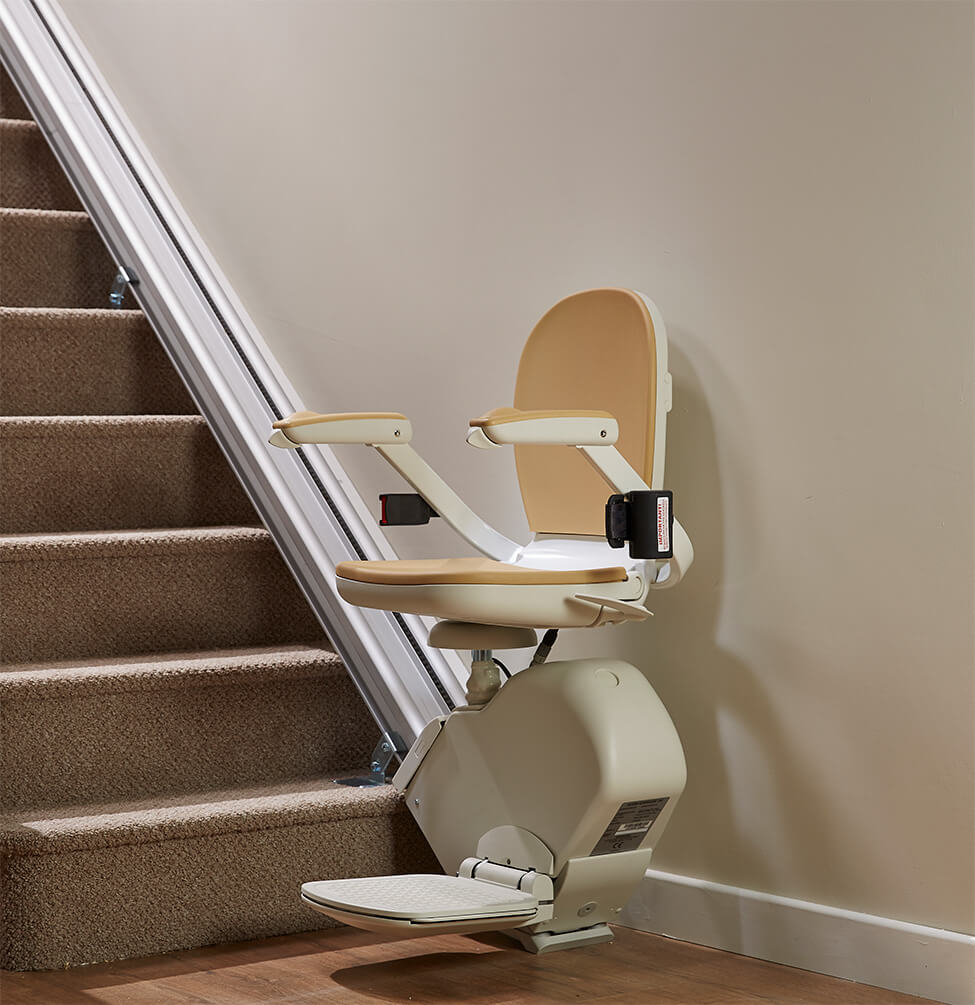
Best for: Elderly buyers whose primary concern is ease of boarding, operating, and exiting the lift, particularly those with arthritis or limited hand dexterity.
Acorn is the only stairlift company in the world to earn the Arthritis Foundation’s Ease-of-Use Commendation, showing its focus on accessibility. The Acorn 130 has simple, easy-to-use controls, and both the seat and armrests fold with little effort. Its soft start and stop make for a smooth ride.
The FastTrack installation system uses modular rails that can be fitted on-site, so most installations take just one to two hours, which is ideal for seniors who want minimal disruption.
The StairSafe monitoring system tracks stairlift use and lets family members check activity remotely, which is very helpful for adult children looking after an aging parent’s safety.
Weight capacity: 300 lbs. | Minimum staircase width: 28 inches | Estimated installed cost: $3,000 to $5,000
Stannah Siena 600: Best for Customization and Long-Term Dependability
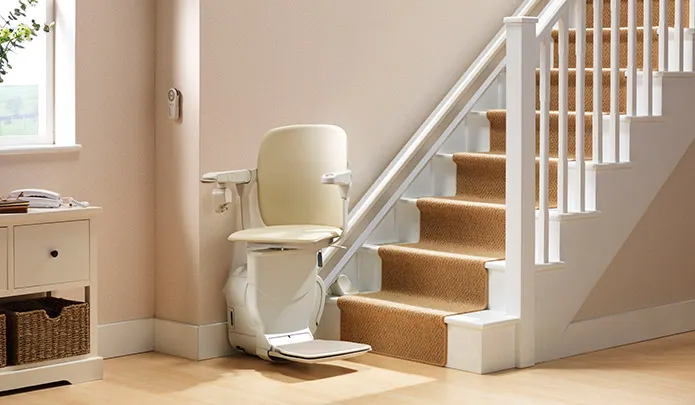
Best for: Elderly buyers with curved or complex staircases who want a manufacturer with a long track record, strong build quality, and a robust warranty on a customized installation.
Stannah has been in business since 1867, helping over 750,000 people in more than 40 countries stay safe and independent at home. Their long history shows in the thoughtful design of their stairlifts. The Stannah Siena 600 comes with a limited lifetime warranty on the motor, gearbox, and rail, giving buyers peace of mind.
The controls are easy to use for anyone with limited hand strength or flexibility. You can operate them with your hand, arm, or wrist. The seat belt is mounted on the armrest and snaps into place with just one hand, making it simple for people with arthritis or limited dexterity.
Weight capacity: 300 lbs. (straight) | Minimum staircase width: 28 inches | Estimated installed cost: $3,500 to $6,000 (straight); $8,000 to $15,000+ (curved)
How to Choose
- If warranty and weight capacity matter most, the Bruno Elite is a top pick.
- If you want easy use and features for arthritis, the Acorn 130 stands out with third-party recognition.
- For narrow staircases, consider the Harmar SL600 or Leaf Home.
- For curved staircases, Stannah’s long experience with complex installations makes it a strong choice.
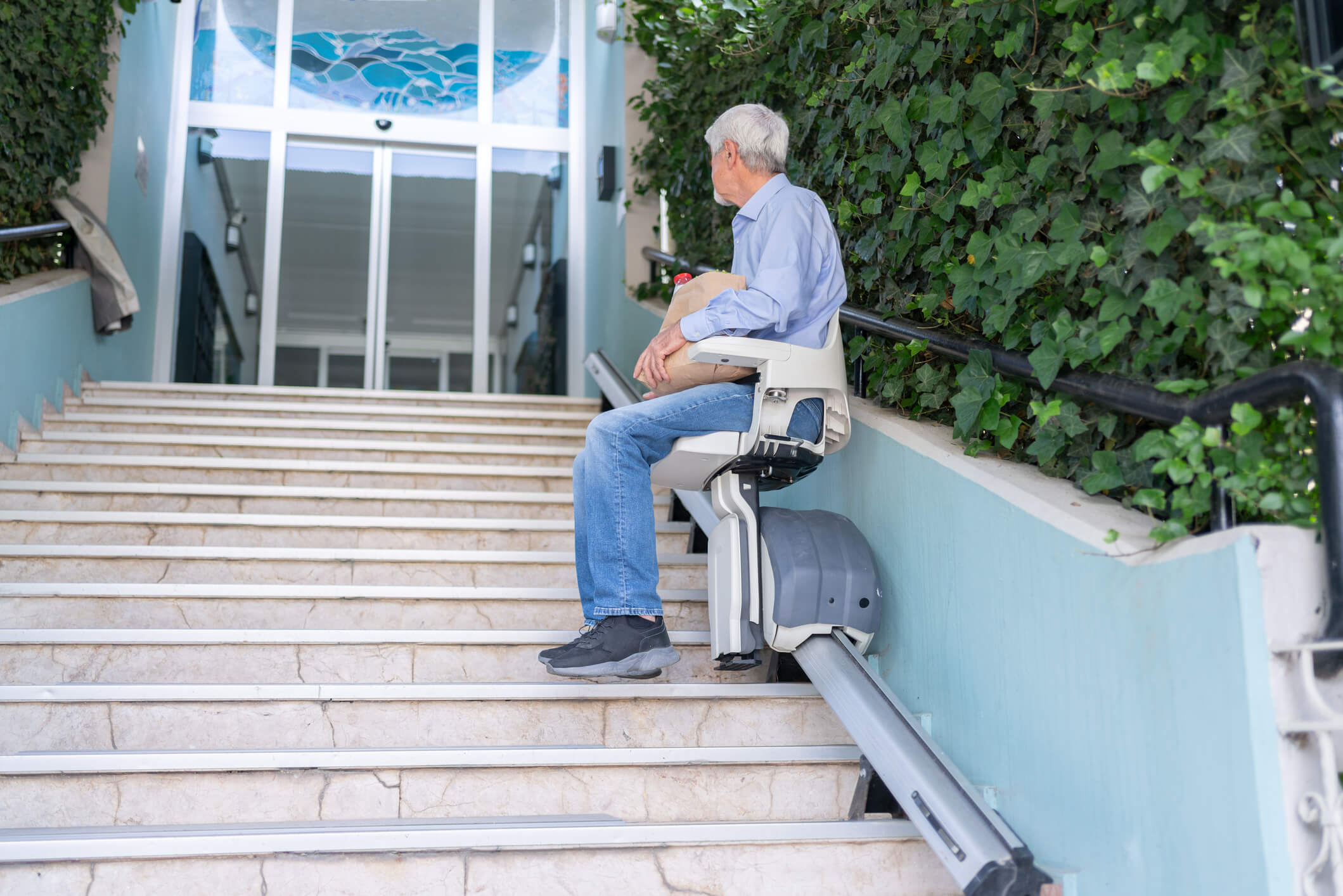
Types of Stairlifts for Elderly Homes
Different staircase layouts and mobility needs call for different stairlift types. Understanding the main categories can help you narrow your options before you start comparing brands.
Straight Stairlifts
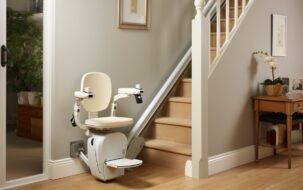
This is the most common and affordable type. Straight stairlifts are made for staircases without curves, turns, or landings. Installation usually takes two to four hours, and straight models use standard rails that can be cut to fit almost any straight staircase.
Curved Stairlifts
Curved stairlifts are custom-built to follow the exact shape of staircases with bends, turns, or intermediate landings. The rail is manufactured specifically for the home, which extends lead time, typically two to six weeks, and significantly increases cost.
Outdoor Stairlifts
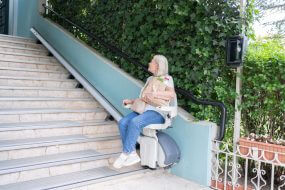
These are made for outdoor stairs on porches, decks, or garden steps. They use weather-resistant materials, ultraviolet (UV)-protected seats, and covered rails to protect against rain, snow, and extreme temperatures. Outdoor stairlifts come in both straight and curved versions.
Rental Stairlifts
Some dealers offer rental stairlifts for short-term needs, such as after surgery, for trial use, or for temporary situations. Rental units are usually reconditioned straight models and cost much less than buying new. Not all dealers have rentals, so availability depends on your area.
What Do Stairlifts Cost for Seniors?
Stairlift costs vary by staircase type, model, and dealer. As a general benchmark:
| Type | Typical Installed Cost |
|---|---|
| Straight stairlift | $2,200 to $8,500 |
| Curved stairlift | $8,000 to $15,000+ |
| Outdoor stairlift | $ $8,000 to $12,500+ |
| Rental (straight, per month) | $50 to $200 per month |
These price ranges are for professionally installed units with standard features. Power upgrades, such as a power swivel, powered folding rail, or higher weight-capacity seats, will increase the base price. Extended warranties and service plans also cost extra.
For a full breakdown of what drives cost, see our Stairlift Cost Guide.
Stairlift costs vary. Request free quotes from local pros to get accurate estimates and compare pricing.
Does Medicare Cover Stairlifts?
Original Medicare does not cover stairlifts. Because they are considered home modifications rather than durable medical equipment, they fall outside Medicare’s coverage criteria.
Some Medicare Advantage plans (Part C) offer extra home modification benefits that may help cover part of the cost. Coverage depends on your plan and state, so contact your plan directly and ask about home modification benefits or assistive technology benefits.
Other funding options worth exploring:
- Medicaid home and community-based services (HCBS) waivers: Many states offer home modification funding through Medicaid waiver programs for eligible low-income seniors. Availability and income limits vary significantly by state. Contact your state’s Medicaid office or local Area Agency on Aging to ask what is available in your area.
- Veterans Affairs (VA) benefits: The VA’s Home Improvements and Structural Alterations (HISA) grant provides up to $6,800 for service-connected veterans and up to $2,000 for non-service-connected veterans for home accessibility changes, including stairlifts.
- Manufacturer financing: Most major stairlift brands and dealers offer payment plans, sometimes with 0% interest for qualified buyers.
- Nonprofit assistance: Groups like Rebuilding Together and some local Area Agencies on Aging offer help with home modifications for people who qualify based on income.
How Long Does a Stairlift Last?
A professionally installed stairlift from a trusted manufacturer usually lasts 10 years or more with regular maintenance. Straight rail systems often last longer than curved ones because they are simpler. Yearly service, which usually costs $100 to $300 per visit, keeps the drive system lubricated, the battery working well, and the safety sensors adjusted.
When comparing brands, look closely at the warranty. A good warranty covers the motor and mechanical parts for life or for a long fixed period, not just the first year. For example, Leaf Home offers a limited lifetime warranty on the structural parts of its residential stairlifts.
Stairlift Installation: What to Expect
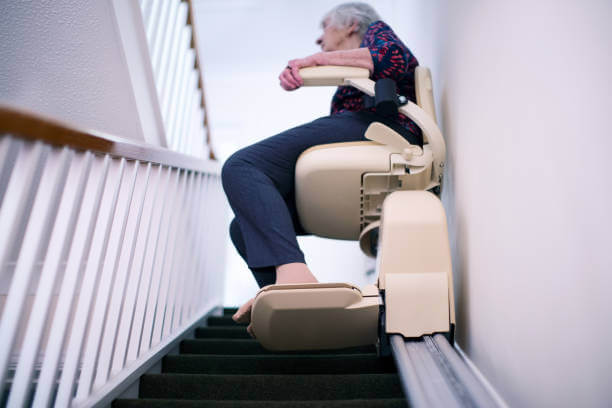
A standard straight stairlift can be installed in two to four hours. The rail attaches to the steps, so there are no wall anchors, no major changes to your home, and usually no permit needed. Installing a curved stairlift takes longer because the rail is custom-made.
What to confirm before installation day:
- A standard 120-volt outlet must be accessible near the top or bottom of the staircase, depending on the model’s charging configuration.
- The staircase must meet the manufacturer’s minimum width requirement, typically 28 to 29 inches for seated models.
- There must be adequate clearance at both the top and bottom landings for the seat to complete its swivel.
A reputable dealer will do a home assessment before ordering equipment to check all these details. Be careful with any company that tries to sell and ship a unit without visiting your home first.
When Is a Stairlift Not Enough?
A stairlift helps you move between floors, but it does not solve mobility problems on the same floor, like getting through hallways, using bathrooms, or going through doorways. For older adults who need more help, a stairlift is usually just one part of a bigger plan for aging in place, which might also include grab bars, bathroom changes, and ramps.
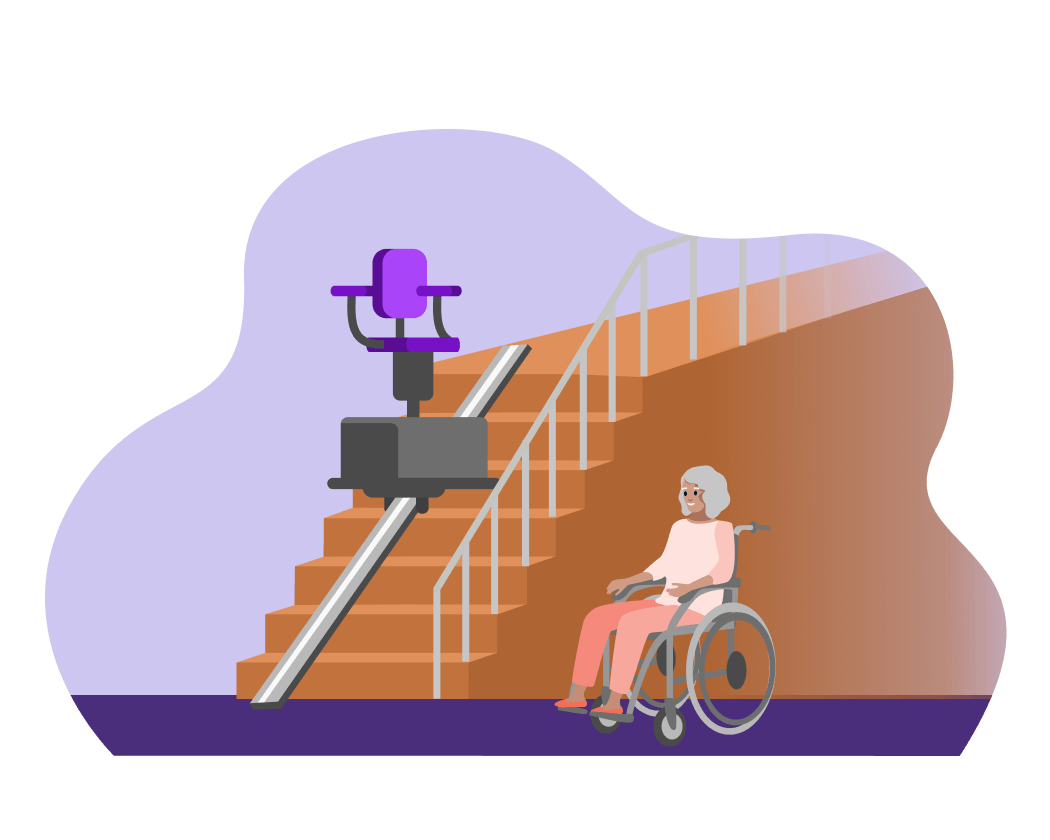
If the user cannot transfer independently into and out of the stairlift seat at all, not just with difficulty, but not at all, a vertical platform lift or residential elevator is a more appropriate solution. These allow wheelchair and mobility aid users to travel between floors without transferring.
Stairlift pros in your area can recommend the best model for your needs. Get connected today!