Water Filtration & Treatment Systems
How Much Does a Reverse Osmosis System Cost in 2026?
Average Cost: $300–$950 (under-sink, installed)
An under-sink reverse osmosis (RO) system costs $300 to $950 installed, including the unit and labor. A whole-house system costs $4,800 to $8,000 installed because it also needs a storage tank and a pump. For most homes, an under-sink system is the better buy, since it treats the water you actually drink. Plan on $50 to $250 a year for filters and upkeep.
Find the best water treatment pros in your area.

The Modernize Mission
We help homeowners make confident decisions through our reliable, up-to-date, and unbiased information and average project costs. All of our content is thoroughly reviewed and fact-checked by our team of home improvement experts. Learn more about how we maintain these values.
Table of Contents
- How Much Does a Reverse Osmosis System Cost?
- Average Costs of Different Reverse Osmosis Systems
- What Is a Reverse Osmosis System?
- Factors That Affect Reverse Osmosis System Costs
- Reverse Osmosis Installation Costs
- Ongoing Costs of Reverse Osmosis Systems
- Additional Costs to Consider
- Reverse Osmosis System Costs vs. Other Water Filtration Methods
- Tips for Saving Money on a Reverse Osmosis System
- Reverse Osmosis System Cost FAQs
- Find a Reverse Osmosis System Installer
- Sources
How Much Does a Reverse Osmosis System Cost?
A reverse osmosis system costs $200 to $8,000 installed, depending mostly on the type you choose. A countertop unit sits at the low end. A whole-house system sits at the high end.
Here’s the full picture by system type:
| Type of Reverse Osmosis System | Unit Cost | Installed Cost |
|---|---|---|
| Countertop | $200–$450 | $200–$450 (no installation) |
| Under-sink with tank | $150–$350 | $300–$700 |
| Under-sink tankless | $300–$600 | $450–$950 |
| Whole-house | $4,500–$7,500 | $4,800–$8,000 |
If you want better drinking and cooking water, start with an under-sink system. It costs a fraction of a whole-house setup and filters the tap you use most. Whole-house RO makes more sense if you’re on private well water with contaminants at every tap. Test your water first so you only pay for what you need.
You may see whole-house systems quoted for less, with some guides listing prices from about $1,000. Ask every installer whether the quote includes the storage tank, the pump, and any pretreatment. Lower quotes may leave those out.
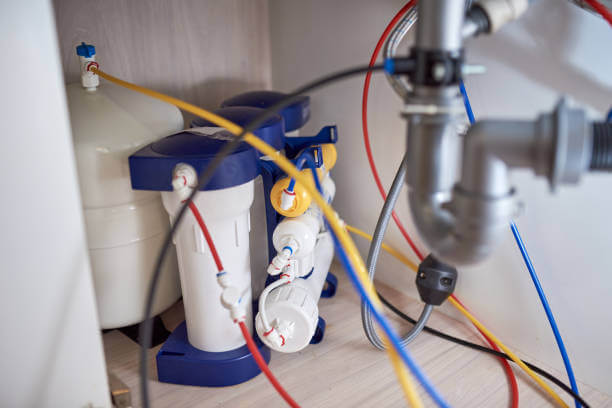
Under-Sink Reverse Osmosis Water Filtration Systems
Average Installation Cost
$300–$950
Cost Breakdown
- Materials 60%
- Labor 40%
Average Costs of Different Reverse Osmosis Systems
Each type of RO system suits a different home and budget. Here’s what you can expect to pay for each one.
Countertop reverse osmosis systems
Countertop systems cost $200 to $450. These portable units need no installation, so they work well for renters and small households. Price depends on the number of filtration stages and how well the unit is built.
Under-sink reverse osmosis systems with a tank
Under-sink systems with a storage tank cost $300 to $700 installed (the unit alone runs $150 to $350). The tank holds filtered water so it’s ready when you turn on the faucet. Most tank models produce 50 to 400 gallons per day, which fits many small and midsize households. The tradeoff is a wait for the tank to refill after heavy use.
Tankless reverse osmosis systems
Tankless under-sink systems cost $450 to $950 installed (the unit alone runs $300 to $600). They filter water on demand, so they take up less cabinet space. They also produce more, about 400 to 1,200 gallons per day, which suits homes with four or more people. Expect to pay roughly $150 to $250 more than a tank model.
Whole-house reverse osmosis systems
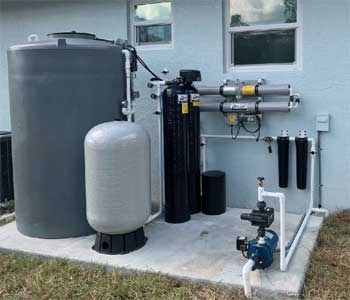
A whole-house system costs $4,800 to $8,000 installed. It connects to your main water line and treats every tap. A full setup includes the RO unit, a 150- to 500-gallon storage tank, and a pump. Price climbs with capacity:
| System Size (Gallons per Day) | Unit Cost | Installed Cost |
|---|---|---|
| 500 | $4,500–$6,500 | $4,800–$7,000 |
| 1,000 | $5,000–$7,000 | $5,300–$7,500 |
| 1,500 | $5,500–$7,500 | $5,800–$8,000 |
Whole-house RO costs many times more than an under-sink unit, and most households don’t drink or cook with water from every tap. It’s a good fit for homes on well water with several problems, or for households that want treated water at every faucet. Features like UV sterilization add to the total.
What Is a Reverse Osmosis System?
A reverse osmosis system is a type of water filtration system that uses pressure and a semipermeable membrane to remove contaminants from household water. You can buy one as a countertop, under-sink, or whole-house unit.
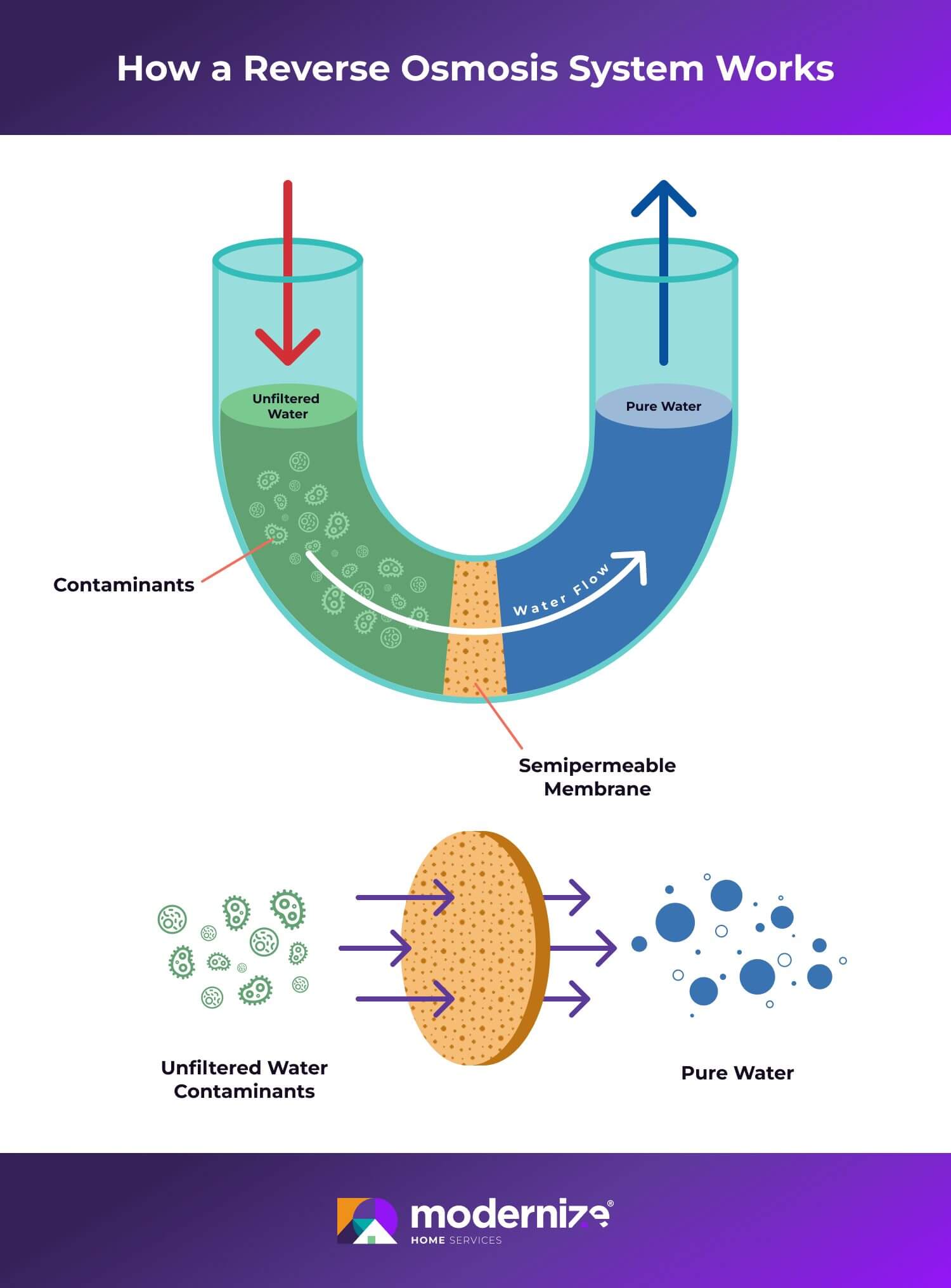
How reverse osmosis works
Water first passes through pre-filters that catch sediment and larger particles. Pressure then pushes it through a membrane with extremely small pores. Clean water passes through, and most dissolved contaminants stay behind. The system flushes those contaminants down the drain and sends the filtered water to your tap.
Here’s a quick look at that process:
What reverse osmosis removes
RO reduces dissolved solids, metals, and chemicals. That includes lead, arsenic, fluoride, nitrates, chlorine, pesticides, and PFAS (the “forever chemicals” found in some water supplies). It also strips out calcium and magnesium, which is why some systems add a remineralization stage.
Bacteria and viruses need a separate note. The membrane can block them, but home RO systems aren’t certified as microbiological purifiers. NSF International says the filters in RO systems protect against occasional contamination of water that’s already safe. If your well water tests positive for bacteria, you need a treatment certified for that, such as UV. Don’t rely on RO alone.
Benefits and drawbacks of reverse osmosis
Pros
- Strong filtration: It removes up to 99% of dissolved contaminants, including lead and arsenic.
- Better taste and smell: It cuts the chlorine that gives tap water an off flavor.
- Lower cost than bottled water: Under-sink systems produce filtered water for about $0.03–$0.10 per gallon.
- Compact options: Countertop models suit renters, and under-sink models free up counter space.
- Less plastic waste: You can cut back on single-use plastic bottles.
Cons
- Water waste: Most under-sink systems drain four to five gallons per gallon filtered.
- Ongoing upkeep: Plan on new filters every six to 12 months.
- Lost minerals: It also removes calcium and magnesium unless you add a remineralization stage.
- Slower refills: Tank models need time to refill after heavy use.
- Higher upfront cost: Whole-house systems run $4,800–$8,000 installed.
Related: Compare Different Types of Water Treatment Systems
Factors That Affect Reverse Osmosis System Costs
Your home’s water quality shapes which system you need. More contaminants usually mean more filtration stages, and that raises the price.
System type and capacity
Type is the biggest price driver. Countertop and under-sink systems cost the least, and whole-house systems cost the most. Capacity matters too. Bigger households need systems that produce more gallons per day, and those cost more.
Filtration stages and efficiency
Most RO systems have three to seven filtration stages. Within the same brand, more stages usually mean a higher price. Efficiency counts as well. Newer high-efficiency models waste about one gallon for every gallon they filter, but they cost around $300 more than standard models.
Brand
Brand affects both price and features. Here’s what popular brands charge for residential countertop and under-sink units (unit only, before installation):
| Brand | Unit Cost |
|---|---|
| Culligan | $1,000–$1,500 |
| Brondell | $250–$450 |
| iSpring | $200–$600 |
| Home Master | $200–$600 |
| Aquasana | $200–$250 |
| Express Water | $150–$300 |
| GE Pro Elite | $150–$230 |
| Whirlpool | $150–$200 |
Culligan sells only through authorized dealers, and an under-sink model runs $1,050 to $1,700 installed. Dealers also rent systems for about $10 to $30 a month, with maintenance included.
Related: Best Reverse Osmosis System Brands of 2026
Certification
No federal rule requires certification for home RO systems. NSF/ANSI Standard 58 is the standard to look for on the label, because it verifies that the system performs as advertised. Certified systems often cost more, and the extra cost is worth it.
Water quality and pretreatment
Very hard water can call for a softener ahead of the RO unit. A softener costs $800 to $2,500 installed. A water test tells you whether you need one.
A water quality test can help you decide whether RO is the right fit. Home test kits cost $10 to $30, and laboratory testing costs $100 to $300.
Reverse Osmosis Installation Costs
Labor depends on system type, size, and how complicated your plumbing is. Plumbers typically charge $45 to $200 per hour.
| Type of Reverse Osmosis System | Labor Cost |
|---|---|
| Countertop | None (no installation) |
| Under-sink | $150–$350 |
| Whole-house | $300–$500 (up to $1,500 for complex jobs) |
DIY vs. hiring a pro
If you have basic plumbing experience and a few common tools, you can install a countertop or under-sink system yourself. That saves about $150 to $300 in labor. A bad connection can cost you more than you saved, so be honest about your skill level.
Leave whole-house systems to a pro. They tie into your main water line, and a mistake can cause serious water damage. Hiring a pro also gets you a warranty on the work.
Questions to ask before you hire
- Will you test my water first to see whether I need pretreatment?
- Does the quote include the storage tank, pump, and drain line?
- Is the system NSF-certified?
- Do you offer a warranty on your labor?
Ongoing Costs of Reverse Osmosis Systems
An RO system costs money after you install it. Budget $50 to $250 a year for filters and upkeep. Once you add the extra water the system sends down the drain, total running costs can reach about $400 a year.
| Ongoing Cost | Price | How Often |
|---|---|---|
| Replacement filters (under-sink) | $20–$100 per filter | Every six to 12 months |
| Replacement filters (whole-house) | $150–$250 each | Depends on water quality |
| RO membrane | $50–$100 | Every two to five years |
| Water use | $0.03–$0.10 per filtered gallon | Ongoing |
| Repairs | $45–$450 on average (up to $800 for larger fixes) | As needed |
Filters wear out faster when your tap water has more sediment, and systems with more stages need more filters. Water use depends on your local rates. Most under-sink systems drain four to five gallons for every gallon they filter, so a high-efficiency model can pay back its extra cost over time.
Additional Costs to Consider
- Pretreatment: A water softener for very hard water costs $800 to $2,500 installed.
- Drain connection: RO systems need a drain for wastewater, and a new drain line costs $300 to $800.
- Electrical work: A new outlet for a pump or whole-house system costs $150 to $350.
- Remineralization filter: Adding minerals back to your water costs $150 to $300.
- Plumbing repairs: Homes with older pipes may need plumbing repairs first.
- Old system removal: Taking out and disposing of an existing system costs $45 to $200.
- Water testing: Testing before and after installation confirms the system works.
Reverse Osmosis System Costs vs. Other Water Filtration Methods
RO costs more than most other filtration methods, but it also removes the widest range of dissolved contaminants. The ranges below are broad national figures. RO covers everything from a countertop unit to a whole-house setup, so see the sections above for costs by type.
| Type of Water Filtration System | Average Cost |
|---|---|
| Reverse Osmosis (under sink) | $300 to $950 |
| Reverse Osmosis (whole home) | $4,800 to $8,000 |
| Well Water | $800 to $4,000 |
| Activated Carbon | $180 to $1,400 |
| Ionization | $400 to $1,900 |
| U/V Light | $350 to $1,500 |
| Water Softeners | $800 to $2,500 |
Return on investment
An under-sink system can pay off over time if you’d otherwise buy bottled water. Here’s our estimate of the 10-year cost, which adds the installed price to 10 years of filters and upkeep at $50 to $250 a year:
| Under-Sink System | Installed Cost | Estimated 10-Year Cost |
|---|---|---|
| With tank | $300–$700 | $800–$3,200 |
| Tankless | $450–$950 | $950–$3,450 |
That works out to roughly $7 to $29 a month, before the cost of water use. Compare that number with what you spend on bottled water today. Whole-house systems take much longer to pay off, and they rarely do unless your water has problems that need treating at every tap.
Environmental impact
An RO system can cut the plastic bottles you buy and throw away. It also sends water down the drain, up to five gallons for every gallon you drink. If that bothers you, choose a high-efficiency model or install RO at a single tap instead of the whole house.
Tips for Saving Money on a Reverse Osmosis System
RO has a high upfront cost, but a few choices can bring your total down.
Test your water first
A $10 to $30 test kit shows what’s in your water. You can skip filtration stages and add-ons you don’t need.
Start with an under-sink system
If you mainly want better drinking water, an under-sink unit does the job for $300 to $950 installed. A whole-house system costs $4,800 to $8,000.
Compare quotes
Installation prices vary by company. Get at least three written quotes, and make sure each one covers the same equipment and work.
Install a simple system yourself
Doing a countertop or under-sink install yourself saves about $150 to $300 in labor. Skip this for whole-house systems.
Consider a refurbished unit
A refurbished system costs less upfront. Confirm it’s in good condition and still covered by a warranty.
Think twice about renting
Renting a system at $10 to $30 a month sounds cheap. Over 10 years, it adds up to $1,200 to $3,600, which can match or beat the cost of buying.
Change filters on schedule
Replacing filters on time protects the membrane, which is the most expensive part to replace.
Reverse Osmosis System Cost FAQs
Find a Reverse Osmosis System Installer
Ready to move forward? Use Modernize’s pro finder tool to receive competitive quotes from local installers, or explore our list of the Best Water Treatment Companies to compare trusted providers.
Sources
- HomeGuide, reverse osmosis system cost
- Angi, reverse osmosis water filter cost
- This Old House, reverse osmosis system cost (2026)
- Thumbtack, reverse osmosis system installation cost
- HomeAdvisor, reverse osmosis system cost (2025)
- NSF, standards for water treatment systems (NSF/ANSI 58)
- Water Quality Association, boil water notice study