Bathroom Remodel
Bathtub and Shower Combo
Average Cost: $2,990 – $8,150
The cost to install a bathtub and shower combo averages between $2,990 and $8,150 for U.S. homes as of 2026. The cost can depend on the bathtub material you choose, as well as whether you opt for sliding glass shower doors or a shower curtain for the enclosure. If you only want to replace the glass doors on your existing tub/shower combo, the average cost is closer to $598.
Compare the best bathtub contractors in your area.

The Modernize Mission
We help homeowners make confident decisions through our reliable, up-to-date, and unbiased information and average project costs. All of our content is thoroughly reviewed and fact-checked by our team of home improvement experts. Learn more about how we maintain these values.
A shower and bathtub combo helps you save space and money and keeps your bathroom flexible. It’s the usual pick for family bathrooms, guest baths, and smaller spaces where a separate shower won’t fit. In this guide, we’ll cover the real costs, top materials, and standard sizes to help you decide if a combo is right for your remodel.
Key Takeaways
- Average Cost: Installing a standard alcove tub/shower combo usually costs between $2,990 and $8,150, depending on the materials and labor.
- Standard Size: Most combos are 60 inches long and 30 to 32 inches wide, so they fit into standard three-wall alcoves.
- Best Materials: Acrylic gives you a good mix of durability, heat retention, and price. Fiberglass costs less but doesn’t last as long. Cast iron is more expensive but can last for decades.
- Who It’s For: Combos are great for families with kids, small bathrooms, and anyone remodeling on a budget. They aren’t the best choice for people with mobility issues unless you pick a walk-in model.
What Is a Shower and Bathtub Combo?
Alcove tub/shower combos are the most common setup in US homes, fitting neatly into a three-walled enclosure.
A shower and bathtub combo is one unit that works as both a soaking tub and a standing shower. It usually fits into an alcove, which is a three-walled space, and uses a showerhead, faucet, and either a curtain rod or glass door to keep water in.
This setup is common in most main and guest bathrooms in the US because it makes the most of a small space. You get the quick convenience of a shower for daily use and the option to take a bath when you want.
Is a Shower/Tub Combo a Good Idea?
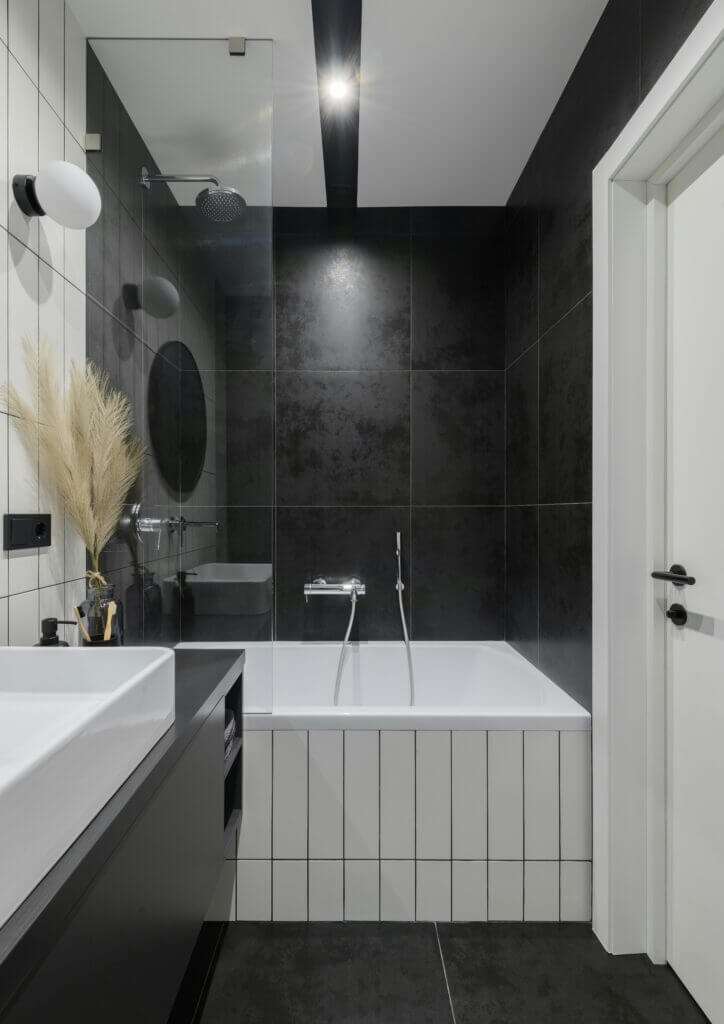
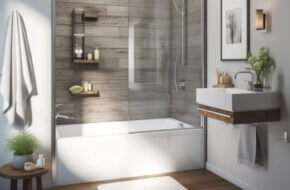
A well-designed combo can look custom and high-end, especially with framed or frameless glass doors.
A shower/tub combo works well for many homeowners, but it’s not right for everyone. Here’s how to decide if it fits your needs.
Choose a Combo If:
- You have a small bathroom. Separate showers and tubs take up a lot of space. A combo fits into a standard 5-foot alcove, so you have more room for a vanity or storage.
- You are on a budget. Putting in one combo unit costs much less than installing a separate shower and tub. You’ll save on plumbing, materials, and labor.
- You have children or pets. Tubs are important for bathing young kids and big dogs. A combo lets you keep this feature without giving up your daily shower.
- You want to protect resale value. Most buyers expect at least one bathtub in a home. If you remove the only tub, you might have fewer interested buyers.
Avoid a Standard Combo If:
- You prefer long, relaxing soaks. Standard alcove tubs are usually shallow. If you want a deeper bath, choose a “soaking” combo model or a freestanding tub with a separate shower.
- You have mobility challenges. Stepping over a 14 to 20 inch tub wall can be risky for older adults or anyone with balance issues. In this case, look for a walk-in tub/shower combo with a low-threshold door.
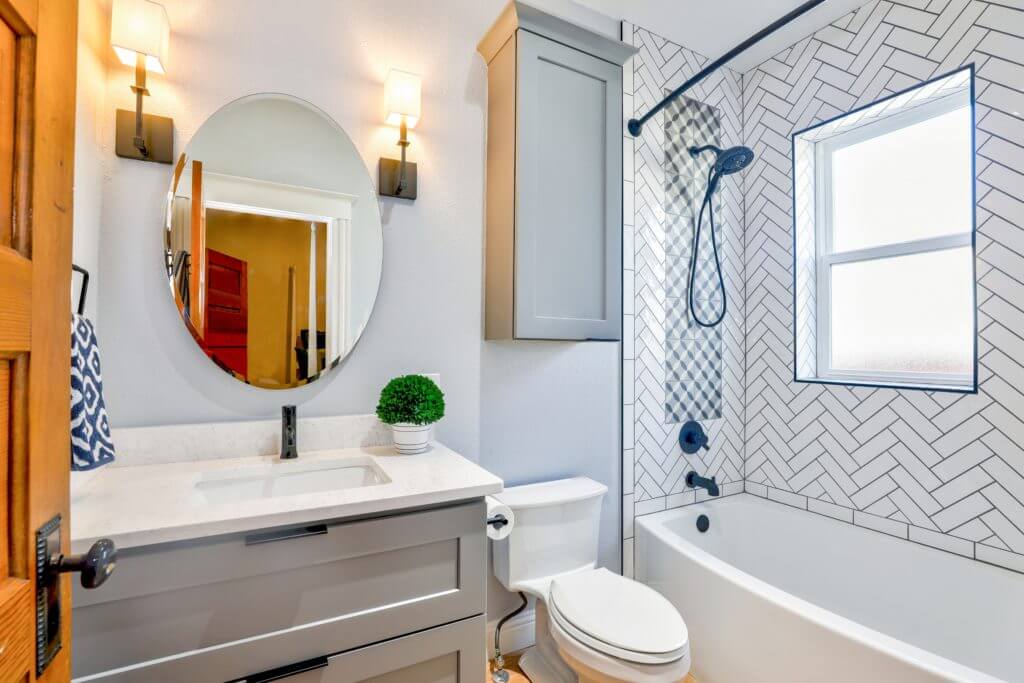
Types of Bathtubs for Shower Combos
Alcove tubs are the most common, but you can also add showers to drop-in and corner tubs.
Not every tub works well with a shower. These are the best options:
- Alcove Tubs: These are the standard choice. They fit into a three-walled space, are affordable, easy to install, and easy to find. Most have pre-drilled holes for faucets and showerheads.
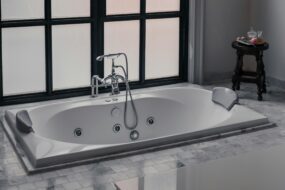
- Drop-In Tubs: These go into a custom-built deck or platform. They give a high-end, built-in look and can be used with a shower, but need more complex framing and waterproofing.
- Corner Tubs: These are triangular or curved tubs that fit into a corner. They save space in tricky layouts but can be harder to find with matching shower surrounds.
- Freestanding Tubs: You can add a shower to a freestanding tub, but it’s tricky. You’ll need a ceiling-mounted showerhead and a curved curtain rod or a custom glass enclosure around the tub, which can be costly and may look cluttered.
- One-Piece Units: These are made of fiberglass or acrylic and combine the tub and surround in one molded piece. They’re the cheapest and easiest to clean since there are no grout lines, but you have fewer design options.
Note: You can also combine jetted and steam tubs with showers, but they need special waterproofing, electrical work, and usually a full-height glass door to keep in steam or splashing water. These upgrades will cost more.
How Much Does a Bathtub Shower Combo Cost?
The average cost to install a new bathtub/shower combo in the US is between $2,990 and $8,150. The final price depends on the tub material, the type of surround, and how complex the labor is.
Cost Breakdown by Setup
- Basic Alcove Tub with Curtain Rod: $2,300 to $3,670. This price includes a standard acrylic or fiberglass tub, a basic faucet, and a tension rod. Labor costs are low if the plumbing doesn’t need to be moved.
- Tub with Glass Shower Door: $2,825–$4,160. Adding a framed or semi-frameless glass door increases the price but gives a cleaner, more modern look.
- Custom Tile Surround & Premium Tub: $5,000 and up. Cast iron or solid-surface tubs, custom tile, built-in shelves, and high-end fixtures all add to the cost. Labor is also higher because of the extra work for tile and waterproofing.
- Walk-In Tub/Shower Combo: $5,000 and up. These special units cost more for the tub and often need electrical work for pumps or heaters.
Hidden Costs to Budget For: Removing the old tub ($500 to $1,000), plumbing changes ($200 to $800), and fixing or waterproofing the wall behind the new surround ($300 to $1,000).
What Are the Standard Dimensions?
Most shower/tub combos are made to fit standard plumbing and framing.
- Length: The standard length is 60 inches (5 feet), but some larger models are 72 inches (6 feet).
- Width: Most are 30 to 32 inches wide. Be sure to measure your alcove carefully, since a 32-inch tub won’t fit in a 30-inch space.
- Height/Depth: The tub wall is usually 14 to 20 inches high. The soaking depth (water level) is usually 12 to 16 inches, depending on the model.
Tip: Measure your alcove width at the top, middle, and bottom. Walls are rarely perfectly straight, so you might need a flexible flange tub or some shims to get a snug fit.
Best Materials for Shower/Tub Combos
Acrylic is the most popular material for combos because it’s durable, keeps heat well, and is affordable.
The material you choose for your tub affects how long it lasts, how well it keeps heat, and the price. Here’s how the main options compare:
| Material | Pros | Cons | Best for |
|---|---|---|---|
| Acrylic | Lightweight, retains heat well, durable, easy to repair scratches. | Can flex if not properly supported; mid-range price. | Most homeowners; best overall value. |
| Fiberglass | Cheapest option; very lightweight. | Scratches easily, fades over time, feels less sturdy. | Tight budgets or rental properties. |
| Porcelain-Enamel Steel | Hard, scratch-resistant surface; classic look. | Chips if hit hard; noisy when water hits it; loses heat fast. | Traditionalists on a moderate budget. |
| Cast Iron | Extremely durable, excellent heat retention, quiet. | Very heavy (requires floor reinforcement); expensive. | Luxury remodels; long-term homes. |
| Solid Surface | Seamless, modern look; highly durable; customizable. | Premium price; requires professional installation. | High-end, contemporary designs. |
What Are Your Next Steps?
A shower/tub combo is a practical and budget-friendly choice for most bathrooms. Here’s how to get started:
- Measure your space. Make sure your alcove is 60 inches long and 30 to 32 inches wide. Check if your walls are straight.
- Choose your material. Acrylic is a safe choice for most people. If you want something more luxurious and long-lasting, consider cast iron.
- Get quotes. Installation can be simple or complex. Use our contractor directory to find licensed bathroom remodelers near you, and try to get at least three detailed quotes.
- Explore alternatives. If a standard combo doesn’t fit your needs, read our guides on bathtub types or walk-in tubs.
Need help finding the right professional? Click below, answer a few questions, and we’ll match you with up to four pre-screened contractors in your area.