Foundations
Foundation Repair Cost in Missouri (2026 Guide)
Average Cost: $4,200 – $13,000

In Missouri, the average cost for foundation repair is around $8,600. Minor repairs usually start at $1,500, while major structural work can reach $28,000 or more. Most homeowners spend about $4,200 to $13,000. The final price depends on local labor rates, your home’s foundation type, and the extent of the damage. In Missouri, damage is often caused by expansive Wymore-Ladoga clay soils, Ozark karst terrain, or proximity to the New Madrid Seismic Zone.
Connect with Missouri’s best foundation repair pros.

The Modernize Mission
We help homeowners make confident decisions through our reliable, up-to-date, and unbiased information and average project costs. All of our content is thoroughly reviewed and fact-checked by our team of home improvement experts. Learn more about how we maintain these values.
Table of Contents
- How Much Does Foundation Repair Cost in Missouri?
- Foundation Repair Cost by Metro Area in Missouri
- Foundation Repair Cost per Square Foot in Missouri
- Factors That Affect Foundation Repair Cost in Missouri
- Cost of Not Repairing Your Foundation
- ROI of Foundation Repair in Missouri
- How to Save on Foundation Repair Costs in Missouri
- Next Steps
How Much Does Foundation Repair Cost in Missouri?
Most Missouri homeowners spend between $4,200 and $13,000 on foundation repairs, with a single-project average of around $8,600. Smaller repairs may cost less, while major structural work can exceed $28,000 — particularly in areas with expansive Wymore-Ladoga clay soils, karst limestone terrain, or proximity to the New Madrid Seismic Zone.
- Minor repairs: $1,500 to $4,200
- Moderate repairs: $4,200 to $12,500
- Major structural repairs: $12,500 to $28,000+
Ready to connect with Missouri foundation repair pros?
Foundation Repair Cost by Metro Area in Missouri
Missouri divides into three geologically distinct foundation environments. Western and central Missouri — from Kansas City to Columbia — sits on expansive clay soils with some of the highest shrink-swell ratings in the Midwest. The Ozark Plateau in the south and southwest transitions to shallow soils over karst limestone, where bedrock proximity and sinkhole risk replace clay movement as the primary concern. Southeastern Missouri’s Mississippi Embayment brings a third set of challenges: soft alluvial soils, elevated water tables, and the New Madrid Seismic Zone. Kansas City and St. Louis carry the state’s highest labor rates; rural Ozark and southeastern markets run more affordable.
| Metro Area | Minor Repair | Moderate Repair | Major Repair |
|---|---|---|---|
| Kansas City | $2,000 to $5,500 | $6,500 to $15,000 | $16,000 to $30,000+ |
| St. Louis | $2,000 to $5,500 | $6,500 to $15,000 | $16,000 to $30,000+ |
| Springfield | $1,600 to $4,500 | $5,200 to $12,500 | $13,000 to $25,500+ |
| Columbia | $1,700 to $4,700 | $5,500 to $13,000 | $13,500 to $26,500+ |
| Independence | $1,900 to $5,200 | $6,000 to $14,000 | $15,000 to $28,000+ |
| Jefferson City | $1,600 to $4,400 | $5,200 to $12,500 | $13,000 to $25,000+ |
| Joplin | $1,500 to $4,200 | $5,000 to $12,000 | $12,500 to $24,500+ |
| St. Joseph | $1,600 to $4,400 | $5,200 to $12,500 | $13,000 to $25,000+ |
| Branson / Ozark | $1,500 to $4,200 | $5,000 to $12,000 | $12,500 to $24,000+ |
| Cape Girardeau | $1,600 to $4,300 | $5,000 to $12,000 | $12,500 to $24,500+ |
Kansas City
Kansas City sits on some of the most aggressive foundation-damaging soil in the Midwest. The Wymore-Ladoga complex — dominant across Jackson, Johnson, Clay, Platte, and Wyandotte counties — carries a USDA NRCS “very high” shrink-swell rating with 60 to 80% clay content. It expands against foundation walls during wet springs and contracts during droughts, compounding damage over decades. These Hydrologic Soil Group D soils don’t drain — water pools on them and drives the differential settlement behind most horizontal wall cracks. Older neighborhoods like Brookside, Hyde Park, and Northeast Kansas City have pre-1900s masonry homes that are especially vulnerable. Find Kansas City contractors near you.
In the Kansas City and Columbia clay belt, maintaining consistent soil moisture around your foundation year-round — using soaker hoses during dry spells and proper grading to direct rain away — is one of the most cost-effective ways to slow the shrink-swell cycle that causes differential settlement.
St. Louis
St. Louis sits on river bluffs along the Mississippi, with Paleozoic limestone and dolomite bedrock that has produced karst features — caves, sinkholes, and underground drainage — in outlying parts of St. Louis County. The uplands are covered by Peoria Loess, a silty wind-deposited material prone to erosion and slope instability. Lower-elevation neighborhoods near the Mississippi and River Des Peres face groundwater intrusion that has worsened as rainfall has intensified. St. Louis also falls within the New Madrid Seismic Zone’s impact area, with older unreinforced masonry structures most at risk. Find St. Louis contractors near you.
Springfield
Springfield straddles the transition between Missouri’s clay belt and the Ozark Plateau’s karst limestone, making it one of the state’s most geologically varied foundation markets. Northern and western parts of the metro carry moderate shrink-swell clay; neighborhoods closer to the Ozark highlands sit on shallow soils over dolomite and limestone bedrock. Contractors here regularly move between both environments — lateral clay pressure in one neighborhood, pier installation through rocky karst substrate in the next. Springfield also falls within the broader reach of the New Madrid Seismic Zone. Find Springfield contractors near you.
Columbia
Columbia sits in the clay soil belt that runs across northern and central Missouri. Boone County soils carry moderate to high shrink-swell potential, and the wet-spring-to-dry-summer moisture cycle generates the consistent expansion-and-contraction stress behind most repair calls here. The Missouri River corridor to the south introduces alluvial bottomland soils in lower-lying areas, where low bearing capacity and erosion risk add a different set of challenges near the floodplain. Columbia’s growing real estate market means foundation issues surface frequently at inspection. Find Columbia contractors near you.
Independence
Independence sits in the heart of the Wymore-Ladoga clay belt — the same USDA-classified “very high” shrink-swell system that makes the Kansas City metro one of the Midwest’s most active foundation repair markets. Jackson County clay soils swell when wet and contract when dry, putting consistent lateral and vertical pressure on foundations. Many homes here were built during the post-WWII boom on inadequately compacted lots, creating conditions for differential settlement over time. Pricing runs close to Kansas City’s, since both share the same labor market. Find Independence contractors near you.
Jefferson City
Jefferson City straddles the Missouri River where central Missouri’s clay-heavy soils meet the edge of the Ozark Plateau’s limestone. Soil conditions can shift significantly within a short distance — clay loam in one neighborhood, shallow soils over bedrock in the next. The river bluffs create drainage challenges on sloped lots, and alluvial deposits along the river bottom carry lower load-bearing capacity. Jefferson City’s mid-state labor market keeps pricing in the moderate range for Missouri. Find Jefferson City contractors near you.
Joplin
Joplin carries a foundation risk no other Missouri metro shares: more than a century of lead and zinc mining left the ground beneath parts of the city honeycombed with abandoned shafts and voids. The Missouri DNR has documented hundreds of mine shafts and pits in the Joplin area, along with up to 4.6 square miles of chat and tailings piles. Where mine voids exist near residential properties, subsurface collapse is a genuine concern that requires site-specific investigation. Joplin also sits at the western edge of the Ozark Plateau, where soils transition between karst limestone and mixed clay and rocky ground. Find Joplin contractors near you.
St. Joseph
St. Joseph sits along dramatic Missouri River bluffs in Buchanan County. Homes on elevated bluff terrain face drainage and erosion challenges on steep slopes. Closer to the floodplain, the conditions reverse: high water tables and soft alluvial soils with limited load-bearing capacity can shift when the river runs high. The city also has a significant inventory of older homes — many from the late 19th and early 20th centuries — with limestone block or brick foundations not built to modern waterproofing standards. Find St. Joseph contractors near you.
Branson / Ozark
The Branson area sits deep in the Ozark Plateau, where the foundation challenge is bedrock, not clay. Soils are shallow and rocky, overlying limestone and dolomite that create karst topography — sinkholes, caves, and underground drainage — throughout Taney and Stone counties. Foundation problems here are typically tied to solution cavities in the limestone rather than soil movement. Pier and underpinning work requires drilling into bedrock, adding time and cost compared to clay-soil repairs; see our overview of foundation repair methods for how these approaches differ. Hilly, lakeside terrain also means many homes sit on sloped lots with ongoing drainage challenges. Find Branson contractors near you.
Cape Girardeau
Cape Girardeau sits at the southeastern edge of Missouri, where the state’s geology shifts entirely to the Mississippi Embayment — a deep basin of soft alluvial sediments with low bearing capacity and high susceptibility to compression. More significantly, Cape Girardeau lies within the direct damage zone of the New Madrid Seismic Zone. A Missouri DNR and FEMA estimate projects that a 7.6-magnitude NMSZ event would cause severe structural damage to 10% of buildings in Cape Girardeau County, with liquefaction of saturated floodplain soils compounding the impact. Foundation inspections here should account for seismic vulnerability alongside routine soil concerns. Find Cape Girardeau contractors near you.
Foundation Repair Cost per Square Foot in Missouri
- Minor repairs: $5 to $18 per square foot
- Moderate repairs: $18 to $44 per square foot
- Major repairs: $44 to $88+ per square foot
Cost by foundation type
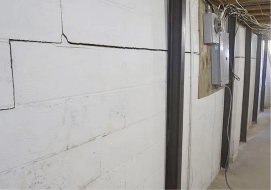
- Basement foundations: $5,500 to $21,000
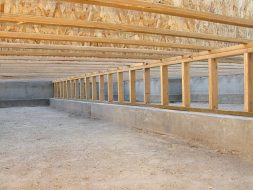
- Crawl space foundations: $4,000 to $14,000
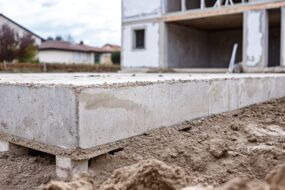
- Slab foundations: $3,500 to $10,500
- Pier and beam foundations: $4,500 to $13,000
Cost by Missouri home size
- Small (under 1,500 square feet): $3,200 to $8,500
- Medium (1,500 to 2,500 square feet): $5,500 to $14,000
- Large (2,500+ square feet): $9,500 to $28,000+
Cost by repair type
- Crack repairs: $600 to $3,200
- Slab jacking (mudjacking): $700 to $2,200
- Piering / underpinning: $6,500 to $28,000+
- Sealing and waterproofing: $1,800 to $9,500
Factors That Affect Foundation Repair Cost in Missouri
- Expansive Wymore-Ladoga clay: USDA NRCS classifies this dominant soil across western and central Missouri as “very high” shrink-swell. It expands when wet and contracts in droughts, a cycle that compounds year after year. Learn to distinguish foundation problems from normal settling.
- The New Madrid Seismic Zone: The most seismically active region east of the Rockies (Missouri DNR). USGS puts a 25–40% probability on a magnitude 6.0+ earthquake in any 50-year period; southeastern Missouri faces the greatest risk.
- Karst limestone in the Ozarks: Dissolving bedrock creates sinkholes and subsurface voids throughout the Ozark Plateau; karst investigation is often required before repairs can proceed.
- Historic mine voids in Joplin: Hundreds of abandoned shafts beneath Jasper and Newton counties create subsurface collapse risk beyond typical foundation concerns.
- River corridor alluvial soils: Floodplain soils along the Missouri and Mississippi have low bearing capacity and absorb periodic flooding, affecting St. Joseph, Cape Girardeau, and parts of St. Louis.
- Frost depth and home age: Foundations must reach below the local frost line (24 to 36 inches in Missouri). Older homes with shallow footings or pre-1950 masonry foundations are most at risk for early warning signs of structural stress.
Cost of Not Repairing Your Foundation
Missouri’s combination of expansive clay soils and variable precipitation makes deferred foundation repairs especially costly. A minor crack or slightly bowed wall that goes unaddressed through a wet spring and a dry summer can become a significantly larger structural problem within a single year. Water intrusion into basements and crawl spaces accelerates wood rot, mold growth, and further structural damage — and crawl space encapsulation is often needed alongside structural repairs once moisture damage has set in. In the Kansas City area’s Wymore-Ladoga clay, that wall continues to bow under lateral soil pressure for as long as the underlying cause goes unaddressed. Homeowners who delay repairs in Missouri regularly find that costs escalate well beyond $30,000 once secondary damage is factored in.
ROI of Foundation Repair in Missouri
Foundation repairs in Missouri typically return an estimated 60% to 80% of their cost in preserved home value. In competitive markets like Kansas City’s suburbs, the St. Louis metro, and growing secondary cities like Columbia and Springfield, buyers and home inspectors scrutinize foundation condition closely. Documented repairs with transferable warranties are viewed favorably and can prevent inspection-driven price reductions or failed sales.
How to Save on Foundation Repair Costs in Missouri
- Schedule before the wet season: Spring brings Missouri’s heaviest rainfall. A late-winter inspection lets you book repairs before contractors fill up.
- Manage soil moisture year-round: Soaker hoses during dry spells slow the shrinkage that causes settling; proper grading and drainage prevent rain from pooling at the foundation — especially in the Kansas City and Columbia clay belt.
- Trim trees near the foundation: Silver maples and cottonwoods send roots toward foundation moisture. Root-pruning within 10 to 15 feet costs far less than repairing root damage. See our foundation maintenance guide for more low-cost prevention steps.
- Get multiple quotes: Two to three estimates confirm the right repair method for your soil type and protect against overpaying. Our guide to choosing a foundation contractor covers what to look for.
- Ask about financing options: Many Missouri contractors offer payment plans, and home improvement loans are widely available for structural work.
Next Steps
If you have noticed cracks in your walls or floors, doors and windows that stick seasonally, gaps between walls and ceilings, or moisture in your basement or crawl space, a professional foundation inspection is the right first step. In Missouri, where clay soils, karst limestone, and the New Madrid Seismic Zone each create distinct risks in different parts of the state, identifying the cause of a problem early makes a substantial difference in repair costs. Modernize can connect you with trusted Missouri foundation repair professionals so you can compare quotes and move forward with confidence.
Connect with trusted Missouri foundation repair professionals.