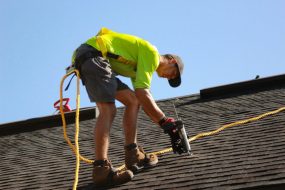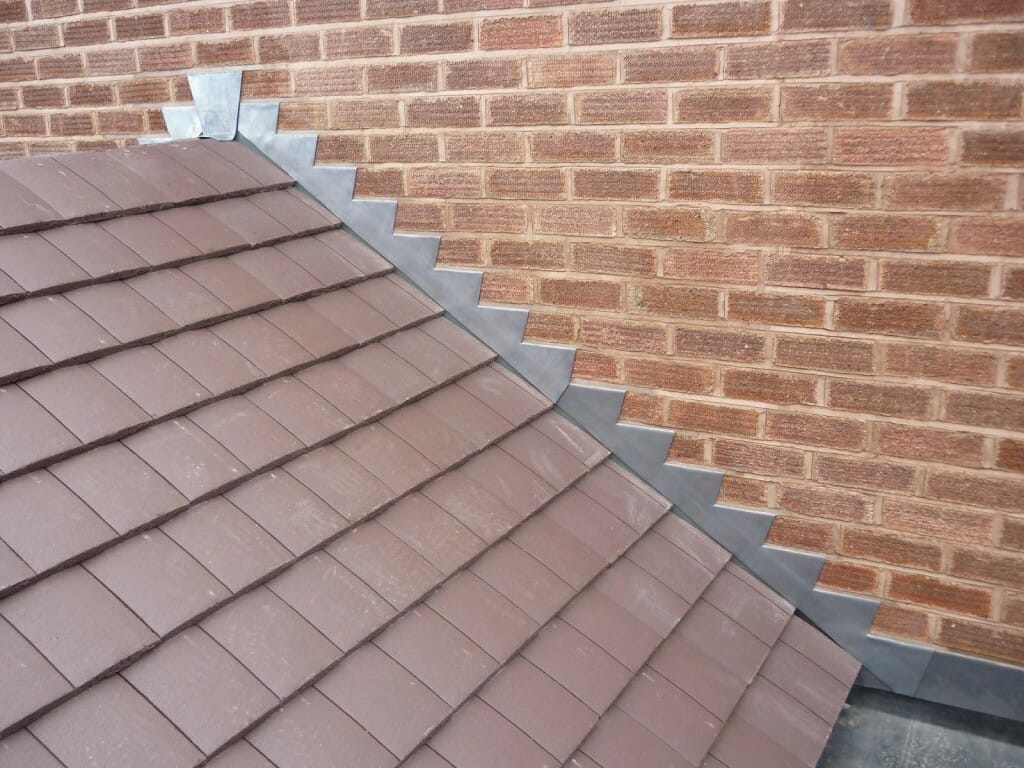
Take a look up at your roof. Whether you see roofing shingles, metal panels, clay tiles or another sturdy roofing material, you probably think that barrier is the only thing that safeguards you from nature’s elements. And while your roofing material does most of the work to keep your home dry, there’s another lesser-known component that works just as hard—the flashing. After all, it’s what reinforces your roofing and prevents roof leaks.
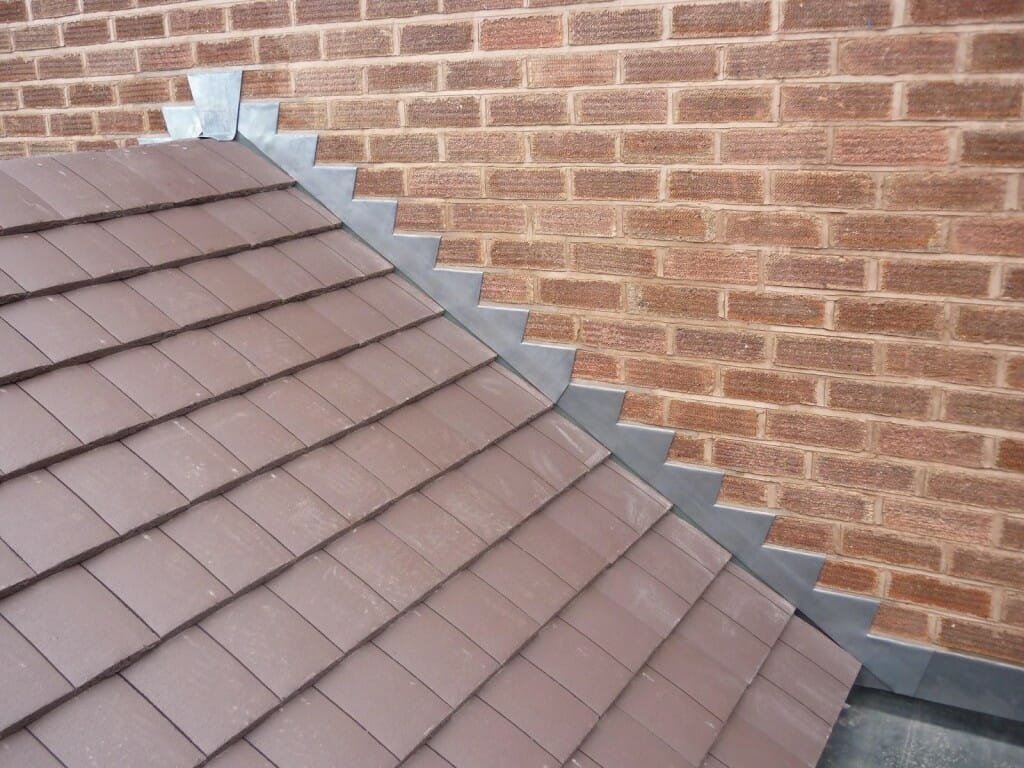
What is roof flashing?
Roof flashing is, very simply, a roll of thin metal that’s resistant to moisture and other weather conditions such as high levels of wind. Flashing can be made from a variety of materials, such as copper roofs, aluminum, lead or galvanized steel roofing. It’s rolled out into place and then sealed in order to prevent issues like water damage and mold.
What does it do?
Flashing helps close a joint in walls or roofing applications to keep water from seeping into the materials used in construction. Valleys, skylights, and vents are all surrounded by flashing to help prevent this issue from occurring. The flashing must be installed very carefully in order to keep out water, but when it’s put in properly it won’t fail as long as the material is intact and remains in position.
How does it work?
Simply put, flashing works by collecting pooling water and directing it away from the location. That’s how nearly every piece of flashing works no matter where it’s located around your home—it just does the job in different ways depending on the situation.
Valleys
In a valley, the piece of metal flashing is installed underneath the shingles of the roof at the edges. That flashing material runs down to a nearby gutter. As water drips down the shingles into the valley, it flows freely down the sheet metal to the gutter or further down the roof. The weak point of the two roof sections meeting is strengthened and kept from leaking through the solid piece of metal.
Decking
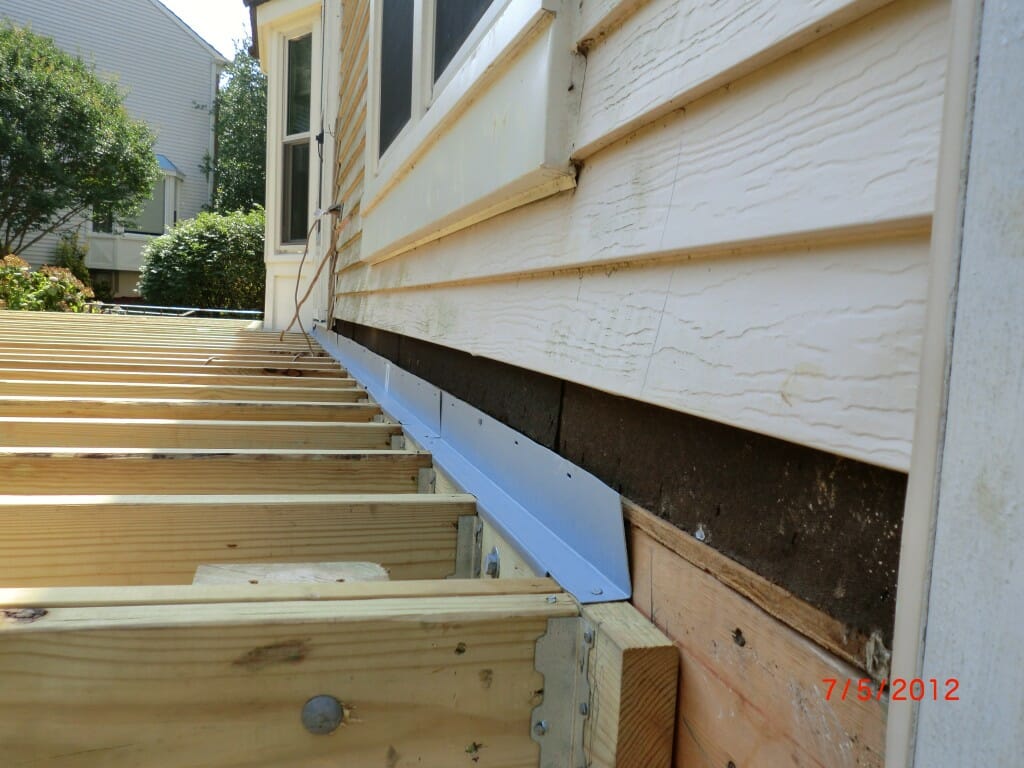
If you’ve ever installed a deck or witnessed one being installed, you may have noticed the metal band against the side of the house. This is the flashing, and it’s designed to keep water from getting in behind the wooden barrier that secures the deck in place. This sheet metal is fastened to the house wall up about six inches above the deck, and it extends down across the deck band and then down the vertical side of the band as well. Often times caulk is applied underneath the flashing as well to create a firm seal in the cut sections around the floor joists of the deck. Siding is installed down along that flashing, which creates a water-tight seal to protect your home.
Chimneys
Chimneys are notorious for allowing water into homes, and before metal flashing was invented, builders went to great lengths to try and avoid this, by placing the chimney up on the ridge, and building steps into their design to prevent seepage. Now flashing is used to stop the issue effectively. Small L-shaped pieces of metal are installed in between shingle courses all along the chimney. At the top, what’s known as a cricket—or saddle roof—is built to create a slope that keeps water from pooling up behind the chimney. A large section of flashing covers that cricket, runs along the shingle run above it, and is mortared right into the chimney itself to create a water-tight barrier. Along the sides, counter flashing is mortared into the brick or stone course and run down overtop of the step flashing. Finally, flashing is mortared into the front of the chimney at the lowest point of the roof slope and sits flush on top of the next course of shingles, where water will run down it.
Vents
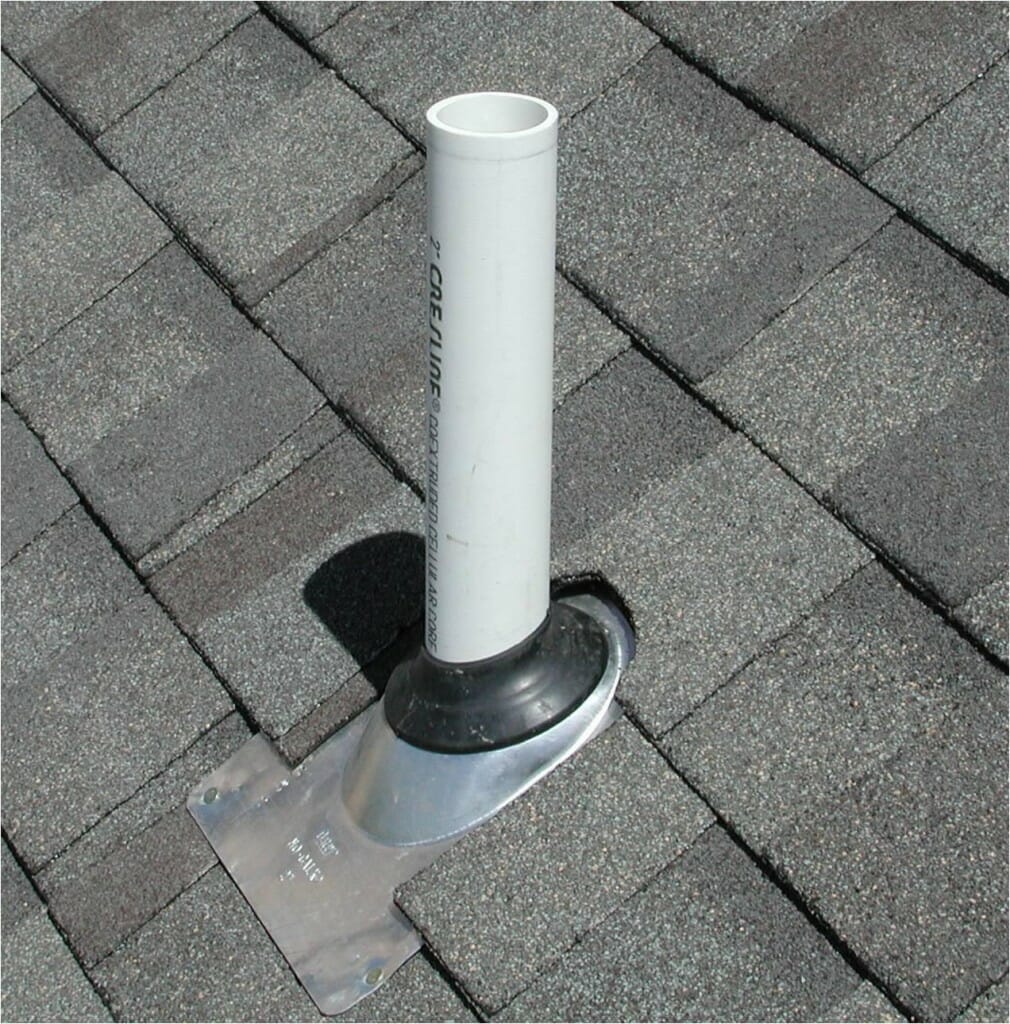
Flashing helps keep water from seeping into the openings around vents or pipes that protrude from the roof. These could be plumbing vents, or a pipe from a wood or pellet stove. The metal flashing has a central spout opening either made of metal for a vent top, or with a rubber compression fitting that will wrap around a PVC or other thin pipe to create a water-tight seal. At the bottom of this unit is a wide, square piece of metal. The center slips over the pipe or vent, where it is installed underneath the roofing and along the top and the back edge, and the front edge is left exposed. This forces water to run out and away from the opening around the vent or pipe.
Flashing is pretty simple once you understand its purpose and how it works. Most serious building projects will include at least a bit of flashing, especially when it’s for a roof or exterior improvement. Make sure that you understand its purpose and function before installing yourself, and—as with any other home improvement project—don’t hesitate to hire a pro for expert help.
Find the Right Contractor for Your Roof Project
Whether you’re ready to begin your project now or need some expert advice, our network of contractors are here to help. With a few simple questions, we’ll find the best local professionals for you