Sunrooms & Patios
Types of Sunrooms: A Guide to Styles, Seasons, and Costs
On this page:
- Common sunroom and enclosed patio styles
- Images of each type
- Best sunrooms by season
Find the best Sunrooms & Patios pros in your area.

The Modernize Mission
We help homeowners make confident decisions through our reliable, up-to-date, and unbiased information and average project costs. All of our content is thoroughly reviewed and fact-checked by our team of home improvement experts. Learn more about how we maintain these values.
What Are the Different Types of Sunrooms?
Sunrooms aren’t one-size-fits-all. The main categories include screen rooms, three-season rooms, four-season rooms, solariums, conservatories, and enclosed porches. You’ll also need to choose a roof style (like gable or shed) and a frame material (such as aluminum, vinyl, or wood).
The biggest difference between these types is climate control. Some are open to the breeze, while others are fully insulated for year-round living. Depending on where you live, you might hear them called sun porches, Florida rooms, or patio enclosures. While the names overlap, the construction and cost vary significantly.
Sunroom types at a glance
| Type | Use it | Heated or cooled? | Typical cost |
|---|---|---|---|
| Screen room | Warm months | No | $25,000–$40,000 |
| Three-season sunroom | Spring, summer, and fall | No | $15,000–$40,000 |
| Four-season sunroom | Year-round | Yes | $35,000–$100,000 |
| Solarium | Year-round (with climate control) | Usually | $30,000–$150,000 |
| Conservatory | Year-round (with climate control) | Usually | $35,000–$150,000 |
| Enclosed porch or patio | Depends on the build | Depends | Varies by type |
Sunroom cost ranges are based on national averages from Angi and other industry guides for 2026. Final prices depend on size, materials, and local labor rates.
Sunroom Types by Season
Most homeowners start here, because the season question decides your budget. Ask yourself how often you’ll use the room in winter and summer.
- Two-season option: Screen rooms (best for spring/summer or summer/fall in mild climates).
- Three-season option: Three-season sunrooms (spring, summer, and fall).
- Four-season option: Four-season sunrooms, solariums, and conservatories (year-round use with climate control).
Screen rooms
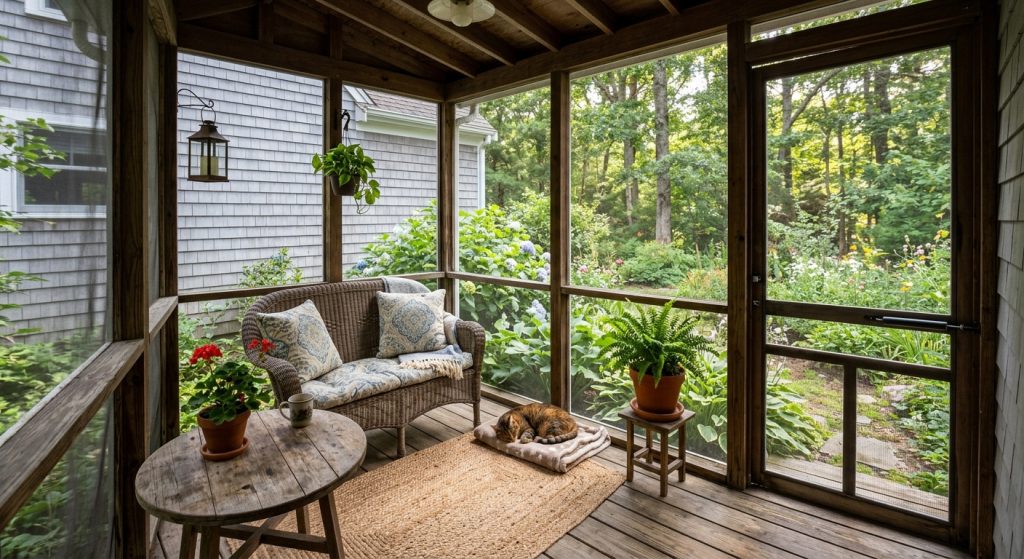
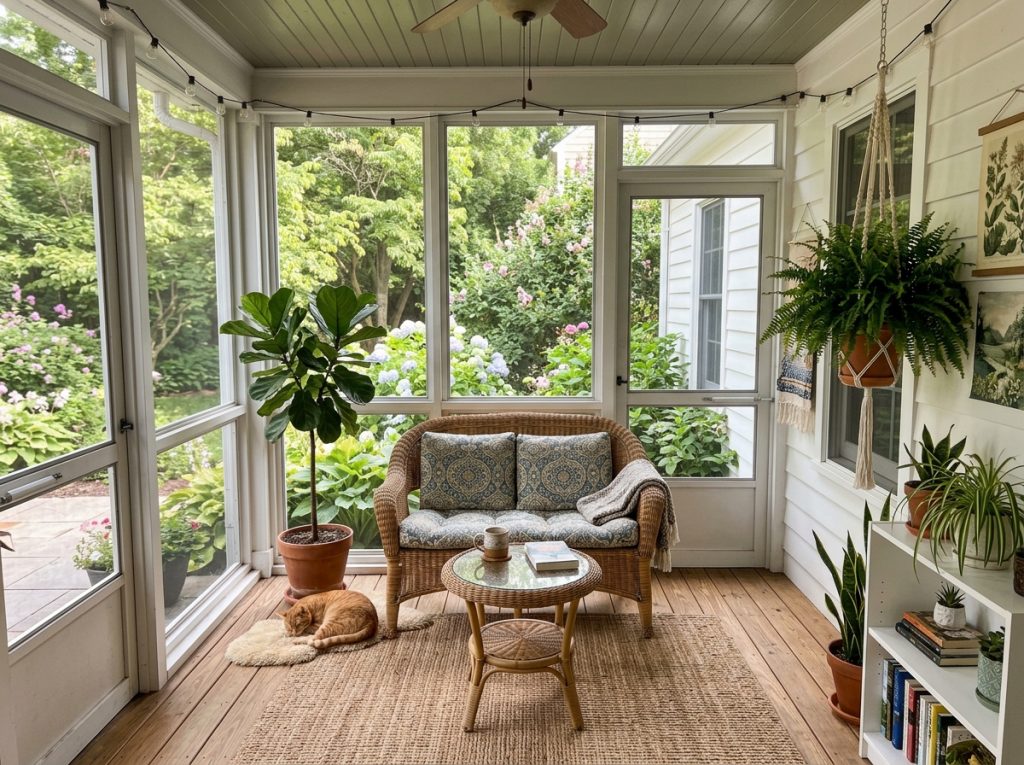
A screen room features a roof and screened walls instead of glass. You get fresh airflow and protection from bugs, but no shelter from rain, wind, or cold. It’s the most affordable enclosed option and works well for existing decks, porches, or balconies.
Many homeowners start with a screen room and add glass panels later if they want to extend the usage season.
Three-season sunrooms
As the name suggests, these rooms are designed for spring, summer, and fall. They typically feature aluminum frames and single-pane or double-pane glass walls but lack insulation and dedicated HVAC connections.
In mild climates, you might use a three-season room nearly year-round. However, in areas with harsh winters or hot summers, these rooms can become uncomfortable without portable heaters or fans. They are a popular middle-ground option because they cost less than four-season rooms while still providing a weather-resistant barrier.
Four-season sunrooms
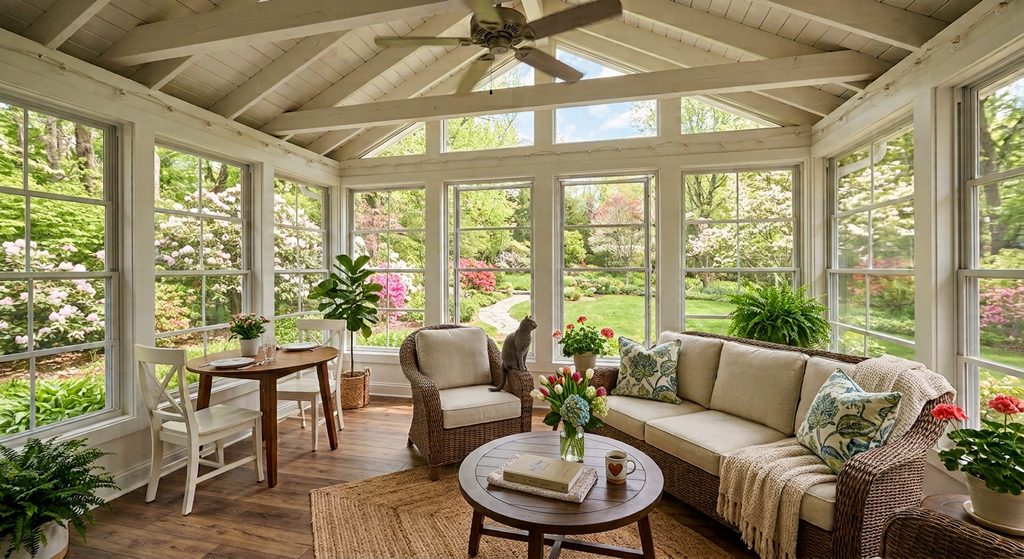
A four-season sunroom is built like the rest of your house: it has insulated walls, thermally broken frames, and double- or triple-pane Low-E glass. Crucially, it connects to your home’s heating and cooling system, making it usable every day of the year.
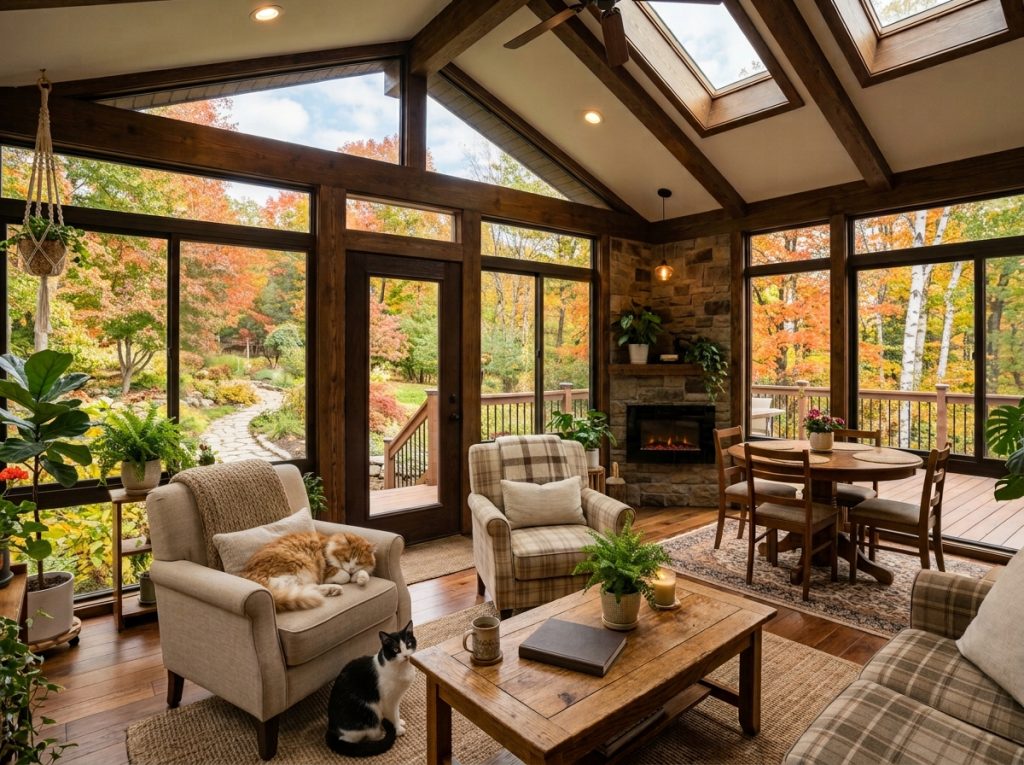
These rooms cost more upfront, but they often add the most value. Because they are insulated and climate-controlled, appraisers may count them as finished living space, potentially boosting your home’s resale value by 4–8% in some markets. If you want a home office, dining area, or family room, this is the type to prioritize.
Solariums
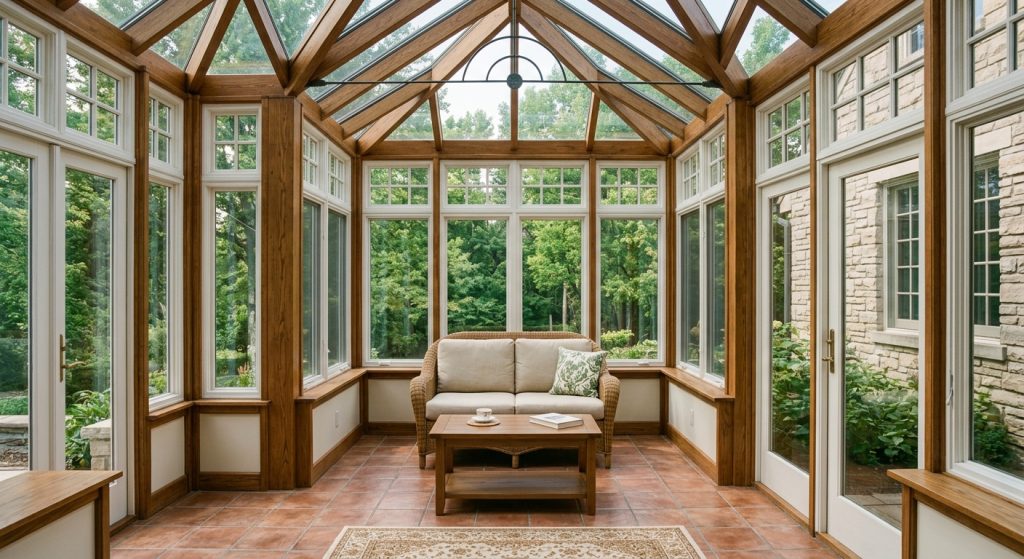
A solarium is defined by its all-glass construction—walls and roof. This provides unobstructed views of the sky and surroundings, making it a favorite for plant lovers or stargazers. Because glass roofs heat up quickly in summer and lose heat in winter, proper ventilation, shading, or climate control is essential for comfort. Solariums are often considered a more contemporary style of glass-enclosed space.
Conservatories
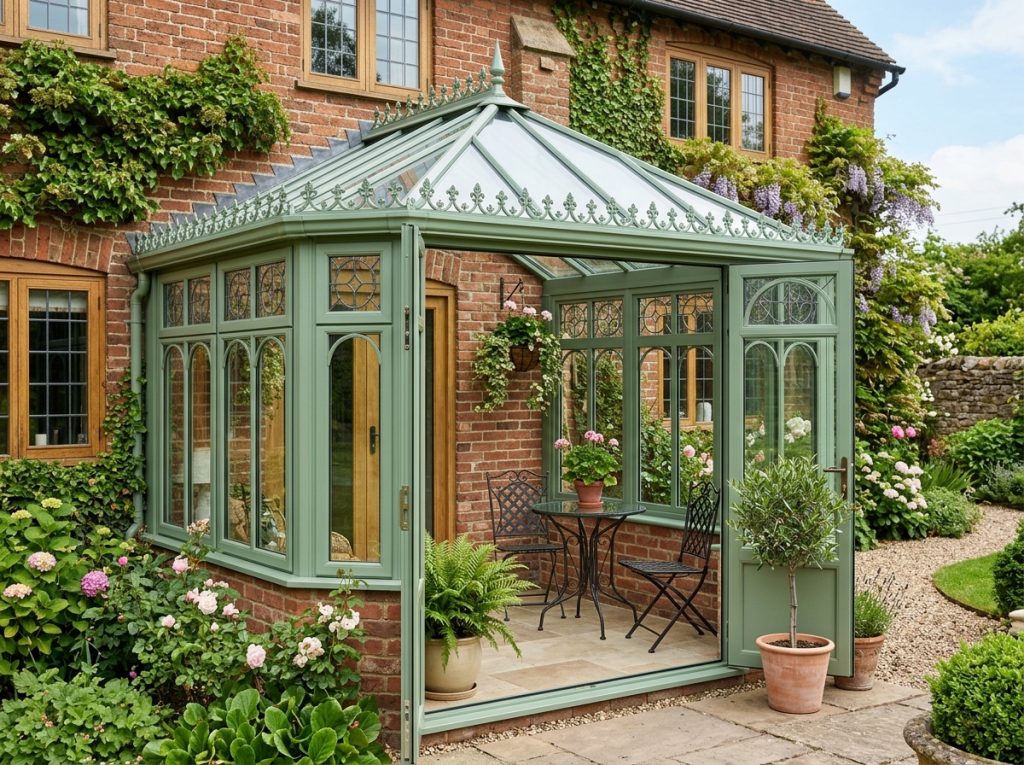
Conservatories typically feature a segmented glass or polycarbonate roof with a Victorian or Georgian architectural style. Unlike standard sunrooms, conservatories often include decorative elements like ridge crests, finials, and ornate gutters. This design is more expensive due to the complex framing and glasswork, but it offers a classic, elegant look suited for traditional homes. Like solariums, they require climate control to remain comfortable year-round.
Enclosed porches
An enclosed porch involves converting an existing covered space into a screened or glassed room. It’s often the most cost-effective route because you may reuse the existing roof and foundation, though a contractor must verify the structure can support the new walls. These spaces vary widely in insulation and climate control, depending on whether they’re built as three-season or four-season rooms.
Sunroom Types by Roof Style
The roof style affects both the aesthetic and the amount of natural light you receive. Roofs can be opaque (solid shingles or metal) or translucent (glass or polycarbonate).
Shed or studio roof
A shed roof has a single slope that angles away from your house, allowing for easy water drainage. It’s one of the most economical and popular choices, especially for homes with lower rooflines or second-story windows that shouldn’t be blocked.
Gable roof
A gable roof features a center ridge with panels sloping down on two sides. This style creates a taller, more open feel and matches traditional home architecture. You can choose a solid roof for better insulation or a glass roof for maximum light.
Cathedral roof
A cathedral roof is a variation of the gable style with a high, vaulted ceiling. It adds drama and headroom, making it ideal for entertaining spaces, art studios, or pool enclosures. The steep pitch also helps shed snow in colder climates.
Conservatory roof
Conservatories typically feature a segmented glass or polycarbonate roof with a Victorian or Georgian architectural style. This design is more expensive due to the complex framing and glasswork, but it offers a classic, elegant look suited for traditional homes.
Solarium roof
A solarium is defined by its all-glass construction — walls and roof. This provides unobstructed views of the sky and surroundings. However, glass roofs heat up quickly in summer and lose heat in winter, so proper ventilation, shading, or climate control is essential for comfort.
Other Sunroom Styles Worth Knowing
Not every sunroom fits neatly into the standard categories. Here are a few other popular variations:
- Traditional (stick-built) sunroom: Built with standard wood framing, drywall, and insulation, this type looks and feels like a natural extension of your home. It’s ideal if you want the room to blend seamlessly with your interior design.
- California room: Popular in warm climates, this is a covered, partly open space that bridges indoors and outdoors. It often includes ceiling fans, comfortable seating, and sometimes an outdoor kitchen or fireplace.
- Two-story sunroom: This addition adds a second floor of glass-filled space, often with a soaring ceiling. It’s a bold architectural statement that maximizes light and views.
- Pool enclosure: A glass or screen room built around a pool or hot tub. It keeps debris out, retains heat, and extends your swimming season.
Prefab vs. Custom Sunrooms
Beyond style and season, you’ll need to decide how the room is constructed.
Prefab kits are manufactured in a factory and shipped to your home for assembly. They generally cost less and install faster, but offer fewer design customization options. Warranties may also be limited compared to custom builds. Most homeowners still hire a pro to assemble and secure the kit to their home .
Custom sunrooms are designed specifically for your house and built to local code. You’ll pay more for labor and materials, but you get a perfect fit, higher-quality windows and doors, and a stronger warranty. Custom builds also allow for unique architectural details that match your home’s character.
Regardless of the path you choose, ensure the structure meets local building codes and HOA rules before signing a contract.
Frame and Glass Options
The materials you choose impact comfort, energy bills, and maintenance.
Frame materials
- Aluminum: Strong, lightweight, and low-maintenance. However, standard aluminum conducts heat quickly, so look for “thermally broken” frames for better energy efficiency.
- Vinyl: Excellent insulator and resistant to warping or rotting. It’s a top choice for four-season rooms where energy efficiency is a priority.
- Wood: Offers a warm, traditional look but requires regular painting or staining to prevent weather damage. Often used in high-end custom builds or historic homes.
Glass options
- Single-pane: The most affordable option, but offers poor insulation. Best for three-season rooms in mild climates.
- Double-pane insulated: The standard for four-season rooms. Two layers of glass with an air or gas gap provide better temperature control.
- Low-E, gas-filled glass: The highest performance option. Low-emissivity (Low-E) coatings reflect heat in summer and retain it in winter, while argon or krypton gas fills improve insulation. This also blocks UV rays that fade furniture and flooring.
How to Choose the Right Type of Sunroom
Start with your lifestyle, then work toward the specifics.
- Pick your season. Do you want a room for year-round living or just warm-weather relaxation? This decision sets your baseline budget.
- Check your climate. Cold winters demand four-season insulation. Mild coastal or southern climates make three-season rooms a practical, cost-effective choice.
- Choose your location. South-facing rooms get the most light (and heat). East-facing rooms catch morning sun, while north-facing rooms stay cooler and brighter.
- Match your roofline. A shed roof suits low rooflines; a gable or cathedral roof complements larger, taller homes.
- Set your budget. Screen rooms and prefab kits are the most affordable. Solariums and custom four-season rooms are premium investments.
- Check permits and HOA rules. Most sunrooms require building permits, especially if they involve electrical or structural changes. Verify this early to avoid delays.