
Stairlifts
Stairlifts: A Complete Guide for Homeowners
What Is a Stairlift?
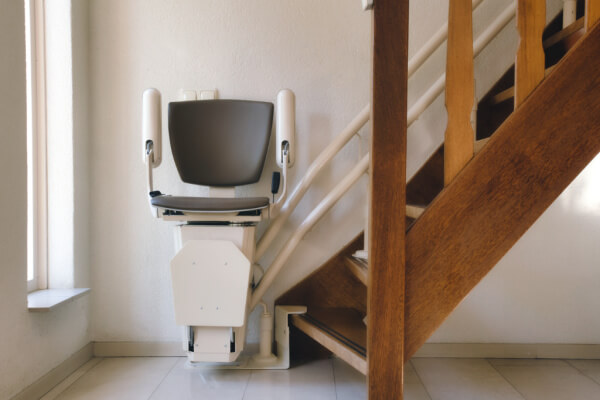
A stairlift is a motorized chair or platform that moves along a rail attached to your staircase. It helps people with limited mobility travel safely between floors without needing to climb stairs. Stairlifts are a popular and effective way for older adults, people with disabilities, or anyone recovering from an injury or surgery to stay independent in a multi-story home.
This guide explains everything homeowners need to know about stairlifts, including how they work, which type fits your staircase and needs, what they cost, and how to find the right installer.
How Does a Stairlift Work?
A stairlift consists of three main elements: a rail mounted to the stair treads, a motorized carriage that travels along the rail, and a chair or platform attached to the carriage. The user sits in the chair, secures the seat belt, and operates the lift using a joystick or button on the armrest or a handheld remote. The lift travels at a slow, controlled speed from one floor to the other and parks at the top or bottom of the staircase when not in use.
Most stairlifts use rechargeable batteries that charge automatically when the lift is parked at its docking point. This allows the lift to keep working during power outages, which is an important safety feature for people who rely on it every day.
See our guide on how stairlifts work for a full explanation of components and their function.
Types of Stairlifts
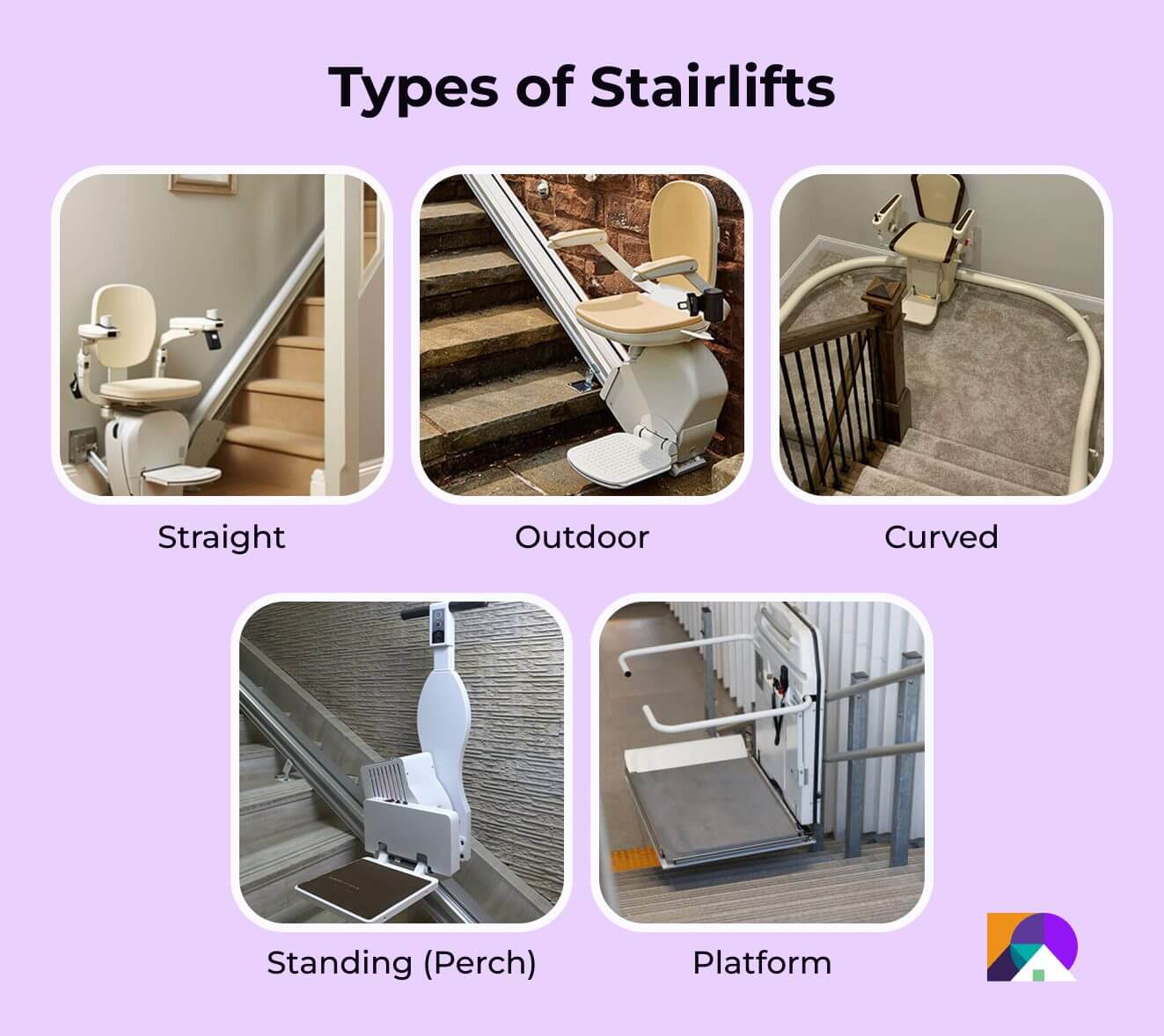
The best stairlift for you depends on your staircase shape, your mobility needs, and your budget. There are five main types for home use.
- Straight stairlifts are the most common and affordable choice. They are made for staircases that go straight up without any curves or landings. These lifts use a standard rail cut to fit your stairs and can usually be installed in one or two days. Most people with a standard staircase choose this type.
- Curved stairlifts are custom-made to fit staircases with bends, turns, landings, or spiral shapes. Since the rail is built specifically for your stairs, curved stairlifts cost more than straight models and take longer to install.
- Outdoor stairlifts are made with weather-resistant parts, such as corrosion-resistant rails, sealed electronics, UV-resistant seats, and weatherproof covers. They are designed for outside stairs like porch steps, deck stairs, and garage entries, and come in straight and some curved versions.
- Standing stairlifts, or perch lifts, have a small padded perch instead of a full chair. This lets the user ride in a semi-standing position. They are helpful for people who have trouble bending their knees or hips, or for narrow staircases where a full chair would not fit.
- Inclined platform stairlifts replace the chair with a flat platform large enough to accommodate a wheelchair and its occupant, allowing wheelchair users to travel between floors without transferring out of their chair. They require a wider staircase than seated models and cost more, but are the most appropriate solution for users who cannot transfer independently.
For a full breakdown of each type including costs, staircase compatibility, and who each is best suited for, see our Types of Stairlifts guide.
Who Is a Stairlift Best For?
Stairlifts are most often used by older adults who want to keep using all floors of their home without risking a fall on the stairs. They are also helpful for people recovering from surgery or injury, those with chronic conditions like arthritis, COPD, heart disease, MS, or Parkinson’s that make stairs difficult, and people with disabilities that make stair use unsafe or impossible.
A stairlift is not always the best solution for everyone. For a standard seated model, users should be able to sit and stand on their own. If getting in and out of a chair is hard, a standing stairlift or an inclined platform lift might be better. An occupational therapist can help assess your needs and suggest the best option before you buy.
Stairlift Costs at a Glance
Stairlift prices can vary a lot depending on your staircase, the model, features, and local labor costs. Here is a general idea of what you might pay:
- Straight stairlift: $2,500 to $8,500
- Standing stairlift: $2,900 to $6,200
- Curved stairlift: $8,000 to $15,000+
- Outdoor stairlift: $6,000 to $12,000+
- Inclined platform lift: $7,500 to $25,000+
- Bariatric or heavy-duty: $4,000 to $12,000+ (straight)
Installation labor typically adds $500 to $1,500 to the equipment cost for straight models. Curved and platform configurations involve more complex installation and higher labor costs.
New vs. used: Certified pre-owned straight stairlifts are easy to find and can save you $500 to $1,000 compared to buying new. Curved stairlifts are rarely available used because each rail is custom-made for a specific staircase.
Rental options: Most major dealers offer short-term rentals of straight stairlifts for $50 to $200 per month. This can be a good choice if you need a lift for recovery after surgery or for other temporary needs.
For detailed cost breakdowns by material, brand, and configuration, see our full Stairlift Cost Guide.
Safety Features to Look For
All modern stairlifts come with basic safety features. When you look at different models, make sure they include the following:
- Seat belt: secures the user during transit. Standard on all models.
- Obstruction sensors: automatically stop the lift if an object is detected on the rail or beneath the footrest. Standard on most current models.
- Swivel seat: rotates the chair at the top and bottom landing for safer entry and exit without twisting on the stairs. Available as manual or powered depending on the model.
- Battery backup: keeps the lift working during power outages. Standard on most current models but worth confirming before purchasing.
- Emergency stop: allows the user to halt the lift immediately from the armrest control or remote.
- Footrest safety edge: stops the lift if the footrest contacts an obstruction on the staircase.
If you need extra safety features like a five-point harness, ankle restraints, or more landing sensors, check that these are available on the model you are considering before you buy.
Maintenance and Longevity
Most stairlifts last 10 years or more with regular maintenance. Annual professional service visits are recommended by most manufacturers and are often included in the first year of a new stairlift warranty. A standard service visit covers mechanical inspection of the drive system and rail, battery replacement if needed, sensor and safety check, and lubrication of moving components.
Between service visits, you can help your stairlift last longer by keeping the rail free of dust and debris, making sure it charges properly at its docking point, and testing the sensors and emergency stop from time to time.
Battery replacement, which is usually needed every three to five years, costs $100 to $200 depending on the model. Energy costs for running a stairlift are minimal, averaging around $15 per year in electricity.
How to Choose a Stairlift Installer
It’s best to have your stairlift professionally installed, and most manufacturers require this to keep your warranty valid. When choosing an installer, check that they are authorized or certified by the stairlift maker, have the right licenses and insurance for your state, have good local reviews, and provide a written estimate with details about the equipment, installation, and warranty. Make sure they also give you a walkthrough and safety demonstration after installation.
Get at least two or three quotes before making a decision, and compare what each one includes, not just the price. The lowest bid is not always the best value, especially for important safety equipment in your home.
Modernize can help you find trusted local stairlift installers. Use our Contractor Checklist to make sure you know what questions to ask before hiring someone.
Frequently Asked Questions
Ready to get your project started?
Let us find the best Stairlift pros in your area, then easily request quotes, book a contractor, and get the job done. It’s that easy.

Homeowner Resources
Here are the top articles that homeowners found useful when planning their Stairlifts project and navigating the contractor hiring process.
Real Stories, Real Success
See how our solutions empower homeowner projects and experiences.