Yes, solar panels usually increase your home’s value, but only when you own them. In the largest recent studies, buyers paid about 2% to 7% more for homes with owned solar, or roughly $9,000 to $15,000 on a typical sale. Leased panels added nothing in the best large-scale study we found.
Older articles quote bigger numbers. Solar is cheaper and more common than it was 10 years ago, so buyers now pay a smaller premium for it. Two other things changed recently: the 30% federal tax credit for homeowners who buy solar ended on December 31, 2025, and several large installers have gone bankrupt. This guide covers what the research says, how those changes affect your decision, and how to protect your value when you sell.
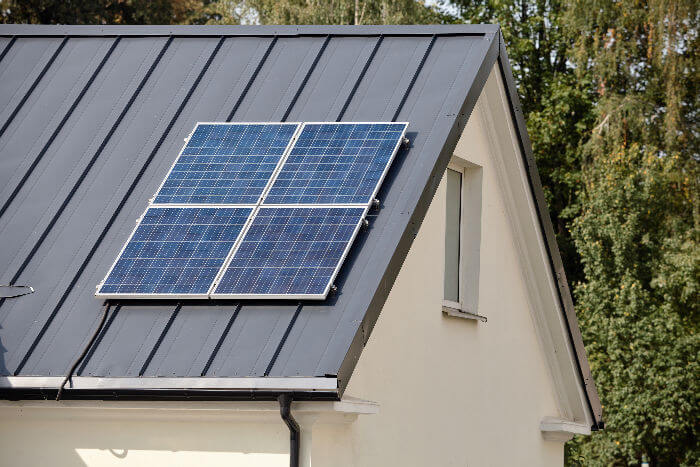
Solar and Home Value at a Glance
Short on time? These are the points that matter most.
- Owned solar adds about 2%–7% to a home’s sale price in recent studies, depending on the study, the market, and the system’s age.
- Leased and power purchase agreement (PPA) systems add little or no value, and they can complicate a sale.
- The federal residential solar tax credit ended after December 31, 2025, but state, local, and utility incentives still exist.
- Many states exempt solar from property tax increases, but the rules vary, so check with your local assessor.
- Evidence that solar homes sell faster is thin, so don’t count on it.
Do Solar Panels Increase Home Value?
Researchers answer this question by comparing sale prices of similar homes with and without solar. Four studies give the clearest picture:
| Study | Sales analyzed | What it found |
|---|---|---|
| Berkeley Lab, Selling Into the Sun (2015) | 22,822 sales in eight states (2002–2013) | About $4 per watt, or $15,000 for a 3.6 kW system |
| Zillow (2019) | Sales from March 2018 to February 2019 | 4.1% more on average ($9,274 for the median-valued home) |
| Fannie Mae and Berkeley Lab (2021) | 554,947 appraised sales in four states (2011–early 2020) | About $2.66 per watt, or $14,500 for a 5.5 kW system (owned systems only) |
| SolarReviews (2024) | About 400 sales | 6.8% more (a smaller sample, run by a solar comparison site) |
The trend matters more than any single number. Fannie Mae and Berkeley Lab found that solar premiums fell by more than 50% between 2011 and early 2020, which tracks with falling installation costs. Berkeley Lab’s 2015 study also found that premiums shrink as a system ages, so a newer system earns a bigger bump than one that is 6 to 14 years old.
You can read the original research from Lawrence Berkeley National Laboratory, Zillow, and Fannie Mae.
Find the best Solar pros in your area.
The $20-per-$1 rule of thumb
You may see a rule that every $1 of yearly utility savings adds $20 to your home’s value. The National Renewable Energy Laboratory (NREL) has cited it from the Appraisal Journal. If your system saves $1,300 a year (Modernize’s estimate for a typical 5 kW system), the rule implies $26,000. That is well above the $14,500 that Fannie Mae and Berkeley Lab found for an average system, so treat the rule as a high-end guess.
A quick estimate for your home
For a typical 6 kW system, multiply 6,000 watts by $2.66 to $4. That gives a rough premium of $16,000–$24,000. For comparison, installation at $2.50–$3.50 per watt costs about $15,000–$21,000. Your local market, the system’s age, and who owns it will move the number up or down, so treat this as a ballpark and not an appraisal.
Owned vs. Leased Solar Panels
How you paid for your system decides whether it adds value. Buyers and appraisers treat the two setups very differently.
Owned systems add value
When you own your system (whether you paid cash or took out a loan), the panels count as part of the home. Fannie Mae and Berkeley Lab found a clear price premium for owned systems. Fannie Mae’s appraisal rules don’t let appraisers count panels that the seller doesn’t own.
If you’re deciding how to pay, our guide to buying vs. leasing solar panels walks through the pros and cons. If you plan to sell within a few years, buying gives you something to sell. A lease gives your buyer a contract to take over.
Leased and PPA systems complicate a sale
With a solar lease or a power purchase agreement, a company owns the panels and you pay a monthly fee or a rate for the power. Fannie Mae and Berkeley Lab found that these homes sold for no more, and in some cases slightly less, than comparable homes without solar. The savings are often offset by the monthly payment.
Selling also takes extra work. The buyer usually has to apply, pass a credit check, and agree to take over your contract, and some buyers walk away instead. Your other option is to buy out the contract before closing. Ask your provider for the transfer rules and a buyout quote months before you list, because the price can run to thousands of dollars.
Are Solar Panels Worth the Investment in 2026?
Modernize estimates that most homeowners pay $2.50–$3.50 per watt for installation, which works out to $15,000–$30,000 before incentives. See our solar panel cost guide for prices by home size. A typical 5 kW system saves about $1,300 per year, and the average payback period is 7 to 10 years. Any value you gain at resale comes on top of those bill savings.
The federal tax credit is gone
The 30% Residential Clean Energy Credit (Section 25D) ended for expenditures made after December 31, 2025, under the One Big Beautiful Bill Act, according to the IRS. If you installed in 2025, you can still claim it on your 2025 return, and unused amounts generally carry forward. If you buy in 2026 or later, there is no federal credit for homeowners.
Companies that own leased systems can still claim a separate business credit (Section 48E), which has its own deadlines. That credit goes to the company, not to you. For your own purchase, look at state, local, and utility rebates instead, and search your ZIP code in the Database of State Incentives for Renewables and Efficiency (DSIRE). Many states also waive sales tax on solar equipment.
Pick an installer that will be around
Several large residential installers have filed for bankruptcy since 2024. Freedom Forever, one of the biggest, filed in 2026, according to local news reports. Your panels keep working if this happens, and manufacturer warranties on panels and inverters generally stay valid. The installer’s workmanship warranty, which covers the roof work and wiring, can disappear.
Before you sign, use a solar installer checklist and read the warranty terms closely. Buyers and appraisers value a system more when its warranties are intact.
Check your roof first
Panels last for decades, so you don’t want to remove them later to replace a worn roof. If your roof is near the end of its life, replace or repair it before installing solar. Then use our solar panel estimator to see how many panels your home needs.
Which Markets Pay the Biggest Solar Premium?
Premiums vary by place. Zillow found that New York homes with solar sold for 5.4% more, while San Francisco and Los Angeles came in around 4%. In Riverside, California, the premium was 2.7%. Fannie Mae and Berkeley Lab found that each added kilowatt raised prices by about 0.41% in California and about 0.23% in Connecticut, Massachusetts, and Oregon.
California and Florida lead the country in residential solar installations, according to the Solar Energy Industries Association (SEIA), and Illinois joined them at the top in early 2026. Texas adds more solar than any other state, though most of it is utility-scale. For a closer look at your state, see our guides for California, Florida, Arizona, North Carolina, New Jersey, Nevada, Massachusetts, New York, and Texas. You can also compare the top states for solar.
If you don’t live in one of these markets, solar can still pay off. Panels produce less on cloudy days but still produce, and they work in colder climates too.
What shapes your premium
These factors move the number most:
- Local electricity rates and the rules for selling extra power back to the grid.
- System size, because Berkeley Lab found that value rises with size up to about 10 kW and then flattens.
- System age, because newer systems earn a bigger premium.
- Ownership, because only owned systems add value.
- How well your listing and appraisal document the system.
Do Solar Homes Sell Faster?
The evidence is mixed. An NREL case study of new homes in San Diego found that efficient, solar-equipped homes sold briskly in a seller’s market. That study looked at new construction from 2001 to 2003, not today’s resale market. We didn’t find a recent large national study that settles the question.
Buyer interest is clearer. A Zillow survey found that more than 80% of buyers say energy-efficient features are important. That interest can help a solar listing stand out, even without proof that it shortens time on the market.
Will Solar Raise Your Property Taxes?
Solar adds value to your home, which could raise your property tax assessment. Many states prevent that with property tax exemptions. SEIA counts 36 states that offer them, though other trackers count fewer because the rules differ. Some states exempt all of the added value, some exempt part of it, some require you to apply, and some leave the decision to local governments.
Before you install, call your local tax assessor and ask three questions: Is solar exempt here? Do I need to apply? Does the exemption expire? Some exemptions have end dates, so confirm yours covers a 2026 installation.
How to Get the Most Value From Solar When You Sell
A premium only helps if buyers and appraisers know about it. Fannie Mae and Berkeley Lab found that appraisers missed solar on more than 25% of solar homes as of early 2020. Do these things before you list:
- Gather your paperwork, including the contract, permits, utility approval, warranties, and 12 months of utility bills.
- Print production data from your monitoring app to show what the system generates.
- Tell your agent and the appraiser that you own the system, and give its size in kilowatts and its install year.
- Ask the manufacturer how to transfer panel and inverter warranties to the buyer.
- Ask your lender how a solar loan is handled at closing, or start a lease buyout early.
Our guide on what to do with solar panels when you move covers the process in more detail. If you’re on the buying side, read about buying a house with solar panels already installed.
Should You Go Solar to Raise Your Home’s Value?
Install solar for the bill savings and treat the resale premium as a bonus. Studies show the premium roughly tracks what a system costs to replace after incentives and what it saves over time. That means you shouldn’t expect a profit from the sale alone. Plan to recover part of the cost at sale and the rest through lower bills. For a closer look at the math, see our guide to the return on your solar investment.
Two choices protect your value most: own your system instead of leasing it, and hire an installer with a solid track record. One caution applies this year. The federal credit is gone, and we found no sales data yet showing how buyers price systems installed without it, so check your local numbers before you count on a premium.
Sources
- Lawrence Berkeley National Laboratory, Selling Into the Sun: Price Premium Analysis of a Multi-State Dataset of Solar Homes (2015)
- Zillow, Going Green: Homes with Solar Panels Sell for 4.1% More (2019)
- Fannie Mae and Lawrence Berkeley National Laboratory, Solar at High Noon: Solar Home Premiums in a Rapidly Maturing Market (2021)
- SolarReviews, solar home value report (2024)
- Internal Revenue Service, FAQs on modifications to sections 25C, 25D, and others under Public Law 119-21
- Solar Energy Industries Association and Wood Mackenzie, US Solar Market Insight Q2 2026
- Solar Energy Industries Association, solar tax exemptions
- National Renewable Energy Laboratory, Planning for PV: The Value and Cost of Solar Electricity
- National Renewable Energy Laboratory, A New Market Paradigm for Zero-Energy Homes: The Comparative San Diego Case Study (2006)
Find the Right Contractor for Your Solar Project
Whether you’re ready to begin your project now or need some expert advice, our network of contractors are here to help. With a few simple questions, we’ll find the best local professionals for you