Groundworks Aquastop BasementGutter Review 2026
Average Cost: $4,000 to $12,000
Key Features
- Interior drainage system that runs along the inside edge of your basement
- Collects water that seeps in from the walls and wall-floor joints, then directs it to a sump pump for removal
- Most homeowners pay between $4,000 and $12,000 for installation
- Only available through Groundworks and its regional subsidiaries

The Modernize Mission
Modernize maintains homeowner-first editorial integrity, meaning we accept no commissions and no partner links for this review. Our reviews are thoroughly fact-checked by our home improvement experts. Ratings are determined by a sophisticated algorithm to rate brands, including analyses of products, materials, quality, costs, sizes, durability, energy efficiency, and warranties.
Table of Contents
- What Is the AquaStop BasementGutter System?
- Why Homeowners Consider the AquaStop BasementGutter
- Signs You May Need an Interior Drainage System
- What Sets AquaStop BasementGutter Apart?
- How Much Does AquaStop BasementGutter Cost Installed?
- How Installation Works
- Compatibility and Ownership Considerations
- When This System Makes the Most Sense
- When It May Be More Than You Need
- Warranty and Support
- How AquaStop BasementGutter Compares
- Sources
- Frequently Asked Questions
What Is the AquaStop BasementGutter System?
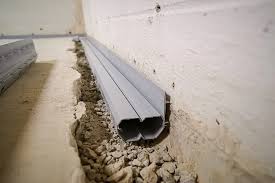
The AquaStop BasementGutter is a below-floor interior drain installed just above the basement footing. Groundworks places the system above the footing’s mud zone — the lowest area most likely to collect silt. This design helps reduce the risk of clogging that can affect some traditional footing-level drains.
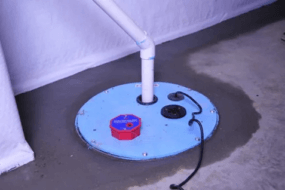
The channel collects water that runs down basement walls or enters at the wall-floor joint, then moves it to a sump pump that discharges it away from your home. A wall flange directs wall seepage into the drain, making this system a good fit for basements with ongoing perimeter moisture rather than just one wet spot. Installation happens inside the basement, so there is no need to dig around the outside of the foundation.
Why Homeowners Consider the AquaStop BasementGutter
Homeowners usually consider this system when basement seepage keeps coming back after heavy rain, snowmelt, or seasonal groundwater pressure — especially if sealing cracks or improving grading has not worked. Since the drain covers the entire interior perimeter, it manages water at the entry point instead of trying to fix each leak separately.
This system is also a good option for homeowners who are finishing a basement or want to protect stored items, flooring, and framing from ongoing dampness. Its main benefit is not that it removes every moisture risk on its own, but that it serves as the primary drainage component of a professionally installed waterproofing system.
Signs You May Need an Interior Drainage System
Here are some common signs that you should consider an interior perimeter drain. These signs do not mean every home needs a full system, but they do suggest a moisture problem that should be evaluated before it causes structural damage or mold.
- Water stains along the base of basement walls
- Damp or musty odors that keep coming back after drying out
- Pooling water during or after heavy rain
- Mold growth or signs of persistent moisture damage on framing or insulation
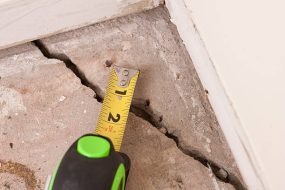
- Visible seepage near wall-floor joints or foundation cracks
- An older waterproofing system that no longer keeps up with seasonal moisture
What Sets AquaStop BasementGutter Apart?
Groundworks offers AquaStop BasementGutter as part of a complete basement waterproofing system, not just as a standalone product. The most important features for homeowners to consider are:
- Interior perimeter design: Installed along the inside edge of the basement to capture water where it most often enters — at the wall-floor joint and along the base of basement walls.
- Above-footing placement: Positioned above the footing’s mud zone to help prevent clogging from silt, which is a known problem with some traditional footing drains.
- Wall flange detail: Designed to guide water running down basement walls into the drain channel instead of letting it collect at the base of the wall.
- Sump pump compatibility: Made to work with a sump pump so that collected water is pumped away from the foundation.
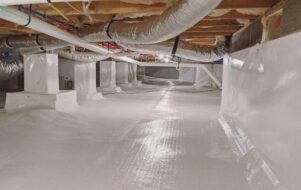
- System integration: Often used together with vapor barriers, dehumidifiers, and sump pump systems as part of a complete waterproofing plan.
How Much Does AquaStop BasementGutter Cost Installed?
Most homeowners spend between $4,000 and $12,000 for a professionally installed interior perimeter drainage system. The lower price applies to a simple, unfinished basement with easy access and an existing sump pump. The higher price reflects a finished basement that needs demolition, careful repairs, and a new or upgraded sump pump.
Rather than focusing on cost per linear foot, it is better to consider the total project scope. The main factors that affect price are:
- Basement perimeter length and square footage
- Amount of trenching and concrete removal required
- Whether a new sump pump or pit is needed
- How much finish material — such as flooring, framing, or drywall — needs to be removed and replaced
- Site access conditions and labor rates by region
Groundworks gives pricing only through in-home estimates, and there are no online quotes. Financing is available through third-party lenders at many locations. Be sure to confirm the annual percentage rate (APR) before you sign.
How Installation Works
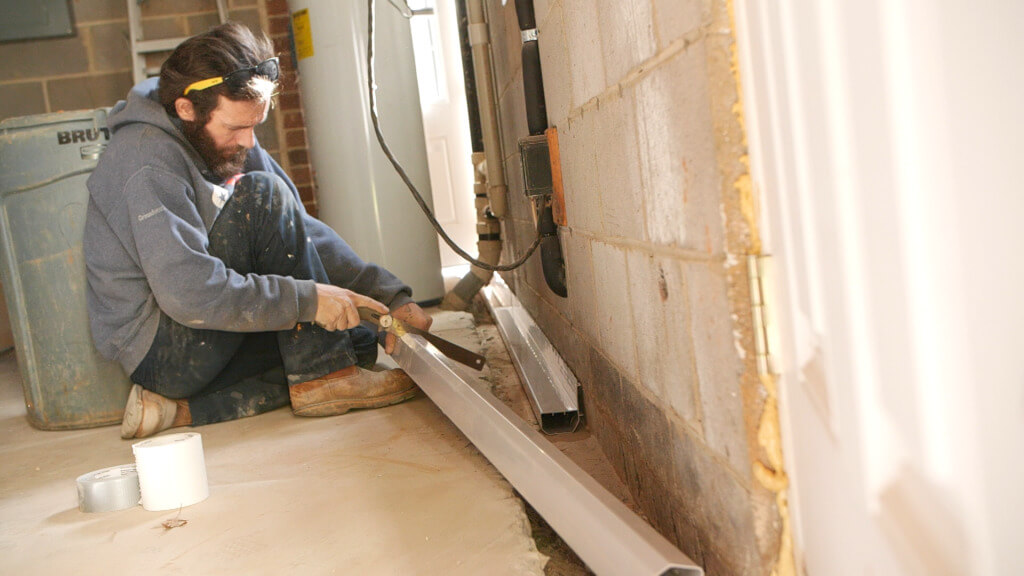
Groundworks or one of its regional subsidiaries handles the installation. Since the system is installed from inside the basement, there is no need for exterior excavation. Homeowners should still expect some disruption to the basement during installation. A typical project includes:
- Basement inspection and moisture pattern assessment
- Project design based on where and how water is entering
- Perimeter trenching along the basement edge
- Drain channel and wall flange installation
- Sump pump connection or upgrade, when needed
- Concrete patch-back to restore the floor surface
Most installations take one to two days for a standard unfinished basement. Finished basements that need demolition and repairs will take longer. Groundworks will provide a project-specific timeline with your written estimate.
Compatibility and Ownership Considerations
AquaStop BasementGutter is one part of a larger waterproofing system and is not a complete solution on its own. In many homes, the drain works together with a sump pump, discharge line, vapor barrier, or dehumidifier. If your basement has several sources of moisture, you will likely need more than one product.
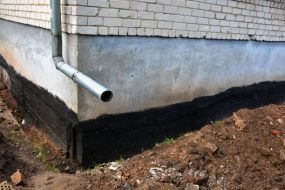
It is also important to understand what this system cannot do. An interior perimeter drain manages water that gets into the basement, but it does not stop water from entering. It is not a replacement for fixing exterior grading, improving gutters and downspouts, or repairing structural cracks if those are the root causes of water problems. A thorough inspector will tell you if these issues need to be addressed alongside, or instead of, installing an interior drain.
When This System Makes the Most Sense
AquaStop BasementGutter is typically a strong fit for:
- Basements with recurring seepage at the perimeter that has not responded to simpler fixes
- Homes in wetter climates or areas with seasonal groundwater pressure against the foundation
- Finished or partially finished basements where moisture control protects a meaningful investment
- Homeowners who want a contractor-installed interior drainage solution tied to a sump pump and backed by a warranty
When It May Be More Than You Need
This system may be more than you need if the moisture problem is limited to one fixable issue, such as a single crack, a misaligned gutter downspout near the foundation, or poor grading on one side of the house. Fixing the source directly may cost much less and solve the problem without a full interior drain system.
It may also be unnecessary if your basement only has mild, occasional dampness, there is no finished space to protect, and you plan to sell your home soon. In these situations, a less expensive fix or simply disclosing the issue to buyers may be more practical.
Warranty and Support
Groundworks supports its waterproofing installations with a transferable warranty that can be passed to new owners when you sell your home. Warranty terms can vary by project, location, and the specific components installed, so ask for the written warranty details before signing and confirm:
- What is covered for the drain channel itself versus connected components like the sump pump
- Whether the warranty covers both materials and labor
- How to initiate a warranty service call and what response time to expect
Some customers have reported difficulty scheduling warranty service with Groundworks at certain locations. To avoid this, get the warranty response process in writing before installation begins. For more details on warranty performance, see our full Groundworks review.
How AquaStop BasementGutter Compares
AquaStop BasementGutter is best compared to other common basement water management solutions. The right choice depends on where water is getting in, how often it happens, and whether you need to protect finished areas.
| Solution | How It Works | Best For | Limitations | Typical Cost |
|---|---|---|---|---|
| Groundworks AquaStop BasementGutter | Interior perimeter drain above the footing that collects wall and wall-floor joint seepage and routes it to a sump pump. | Recurring perimeter seepage; ongoing moisture control needs. | Requires interior trenching and concrete patch-back. Works best as part of a full waterproofing system. | $4,000 to $12,000 |
| Exterior Footing Drain / Excavation | Excavates around the foundation exterior to install or replace drainage and block groundwater before it enters. | Major exterior drainage failures; persistent hydrostatic pressure. | Most invasive and expensive option. Disrupts landscaping and exterior access. | $6,000 to $15,000+ |
| Crack Injection / Localized Repair | Seals one crack or isolated leak point rather than managing full-perimeter water intrusion. | Single-point leaks with a clearly identified source. | Insufficient for basements with seepage in multiple areas or along the full perimeter. | $300 to $2,500 |
| Grated Drain / Surface Collection Drain | Captures surface water at one predictable entry point such as a stairwell or entry door. | Localized surface water at a single entry point. | Not a substitute for a full perimeter drain when moisture enters along walls and wall-floor joints throughout the basement. | $500 to $3,000 |
AquaStop BasementGutter is a good choice if you have ongoing perimeter seepage and want a contractor-installed interior drainage system that works with a sump pump. It offers a more complete solution than a single repair, but is less invasive and less costly than excavating the outside of your foundation.
Sources
- Groundworks: Interior Basement Waterproofing Solutions
- Groundworks: Warranty Information
- Angi: Basement Drain Installation Cost Guide
- Groundworks: Sump Pump Solutions
- ENERGY STAR: Basement and Crawlspace Air Sealing and Insulating