The best heating system depends on your climate. Gas furnaces still make the most sense in the coldest parts of the country. Heat pumps make the most sense in mild ones, and modern cold-climate models now work in many places that used to rule them out.
This guide covers the best heating system for each region of the U.S., what heating is expected to cost this winter, and which efficiency ratings to check before you buy. For heating, look at AFUE for furnaces and HSPF2 for heat pumps. SEER2 rates cooling.
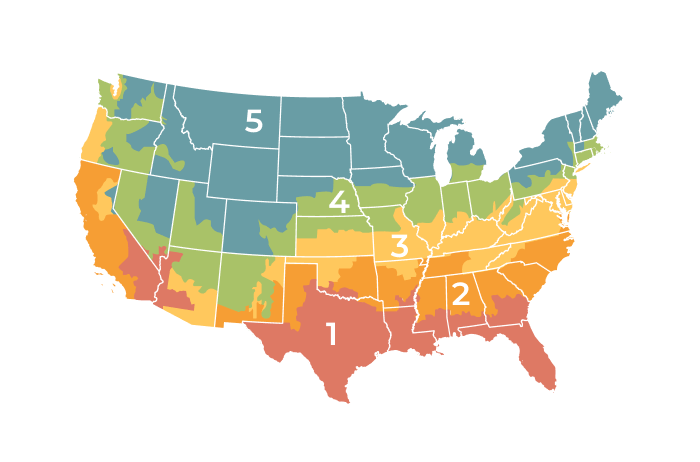
The map below divides the country into five climate zones. Some regions, like the Midwest, cross more than one zone, so we point out which systems suit the colder and warmer parts of each region.
Which Heating System Is the Most Popular in the U.S.?
Heating is one of the biggest energy costs in many homes, so the system you choose matters. The U.S. Census Bureau has asked households what they heat with since 1940. In the 2024 American Community Survey, analyzed by the U.S. Energy Information Administration (EIA):
- 47% of homes used natural gas as their main heating fuel, down from 49% in 2010.
- 42% of homes used electricity.
- Propane, heating oil, and wood heated most of the rest.
Natural gas still leads, but electric heat pumps are gaining ground every year because they use less energy to deliver the same heat. Heat pumps outsold gas furnaces in the U.S. in 2022 and 2023, according to industry data. Sales growth has been strongest in colder regions.
Want to see what a new HVAC system might cost for your home?


Best Heating System by Region at a Glance
This table gives the short version. The sections below explain each pick and what to watch for.
| Region | Most common fuel | Our pick | Why |
|---|---|---|---|
| Northeast | Natural gas (heating oil is common in New England) | Gas furnace, or a cold-climate heat pump if you burn oil or propane | Gas is the cheapest fuel to run here this winter, and oil prices are climbing. |
| Southeast | Electricity | Heat pump | Mild winters keep heat pumps efficient. |
| Midwest | Natural gas (plus the most propane) | Gas furnace, or a dual-fuel heat pump | Deep cold favors gas, and a heat pump can trim mild-weather bills. |
| Southwest | Natural gas and electricity | Heat pump (check local costs) | Mild winters, but costs vary by elevation and location. |
| West | Natural gas and electricity | Heat pump in mild areas, gas furnace in cold areas | Climate varies widely across the region. |
Best Heating Systems for the Northeast
Northeast winters are long, cold, and windy, so your heating system has to work hard. Natural gas is the most common heating fuel in the region, but the Northeast is also where most heating oil gets burned. About 82% of the 4.79 million U.S. homes that used oil as their main fuel in winter 2023–24 were in the Northeast, according to the EIA. In New England, oil still heats about 29% of homes, partly because gas pipelines don’t reach much of Maine, Vermont, and New Hampshire.

For most Northeast homes with gas service, the best heating system is a gas furnace. It heats quickly in subzero weather, and gas costs less to run here than other fuels. The EIA expects Northeast homes that heat with gas to spend about $879 this winter, compared with $1,637 for electric heat and $1,687 for propane.
If you heat with oil, this is a good year to compare options. The EIA expects heating oil to cost about 34% more per gallon than last winter (around $5.26). Switching to gas, if it’s available on your street, or to a cold-climate heat pump can protect you from oil price swings. Check your state’s rebates first; see what heat pump installation costs in Massachusetts for one example.
Why gas heating works well in the Northeast
- Gas furnaces deliver strong, fast heat when temperatures fall below freezing.
- Gas is the lowest-cost heating fuel in the region this winter.
- Most homes already have gas service and ductwork, which keeps replacement costs down.
One common myth is that a gas furnace keeps running in a blackout. Most modern gas furnaces need electricity for the blower and igniter, so they stop when the power goes out. If a nor’easter knocks out your power often, a backup generator keeps any heating system running.
When a heat pump makes sense in the Northeast
Cold-climate heat pumps that meet the Northeast Energy Efficiency Partnerships (NEEP) specification are built to keep heating in subzero weather (down to -13°F). They’re a strong fit if you’re replacing oil or propane heat, adding central air, or can get a state or utility rebate. Ask your installer about backup heat for your coldest nights.
Best Heating Systems for the Southeast
Winter is a welcome break from sweltering summers in the Southeast, but it still gets cold, and most homes need reliable heat. The South is the only U.S. Census region where electricity is the main heating fuel in most homes, according to the EIA. For most Southeast homes, the best heating system is a heat pump.s in the Southeast United States. Here, most homes can benefit from an electric heating system.

Electric resistance heating (electric furnaces and baseboard heaters) turns all of the electricity it uses into heat. A heat pump does better because it moves heat instead of making it. In winter, it pulls heat from the outdoor air and brings it inside, like an air conditioner running in reverse. You get the same warmth for much less electricity, and the same unit cools your home in summer.
Outdoor temperatures in the Southeast rarely drop near 0°F, so a heat pump stays efficient most of the winter. For a local price check, see what heat pump installation costs in North Carolina. If winter power outages worry you, a portable or whole-home generator can keep your system running.
Remember: heat pumps are a great fit for warmer climates, while gas furnaces still have the edge where winters get very cold. Cold-climate heat pumps are narrowing that gap.
Best Heating Systems for the Midwest
The Midwest has very cold winters, so like the Northeast, the best heating system for most Midwest homes is still a gas furnace. Natural gas heats most homes in the region, and the Midwest also has the highest share of propane heating in the country, according to the EIA. If you live outside the gas grid, a propane furnace is the usual alternative. The EIA expects Midwest homes that heat with gas to spend about 10% less this winter than last.

Heat pumps in the Midwest used to be a hard sell. Older models lost capacity as temperatures dropped and switched to expensive backup heat. Newer cold-climate models handle much more of the winter, but very cold stretches still test them.
A dual-fuel system splits the difference. It pairs an electric heat pump with a gas furnace. The heat pump covers fall, spring, and mild winter days, and the furnace takes over when it gets very cold. That setup also gives you central air in summer.
Not sure which way to go? Our heat pump vs. furnace guide walks through the tradeoffs, and you can check heat pump costs in Minnesota for a cold-state benchmark. It’s also worth using an HVAC contractor checklist when you compare bids.
Best Heating Systems for the Southwest
The Southwest covers a lot of ground. Daytime temperatures in the desert can be blazing, then drop sharply at night and in winter. Higher-elevation cities like Denver and Salt Lake City get much colder than Phoenix. Most Southwest homes still have gas heating, but the best heating system for most Southwest homes is an electric heat pump.

Costs vary by location, though. A 2018 report from the Southwest Energy Efficiency Project found that new homes with mini-split heat pumps were cost-effective across the region and used 31% less energy. For existing homes, Phoenix residents saw lower replacement costs than their neighbors in Denver, Salt Lake City, Reno, and Las Vegas. Phoenix homeowners saved 41%, while those in Denver paid 18% more.
So a heat pump may be the most efficient option in the Southwest, but gas can make more financial sense in colder, higher-elevation areas. Always get a total installation quote from a local contractor before you decide.
Best Heating Systems for the West
Yes, even California has chilly days. Heating needs across the West range from mild coastal winters to snowy mountain ones. Households here are more likely than the national average to heat with wood or to report using no heating equipment at all, according to the EIA. The EIA also expects Western homes that heat with gas to spend about 7% more this winter, even though gas prices are lower.

Forced-air systems that use the home’s ducts are the most common choice. Your climate decides which one fits best:
- In mild coastal areas and most of California, a heat pump is usually the most efficient choice.
- In cold inland areas and the northern Rockies, a gas furnace or dual-fuel system holds up better.
- If you’re deciding between fuels for a furnace, compare gas and electric furnaces first. Gas typically costs less to run.
Heat pumps are especially popular in new Western homes, and they keep monthly utility bills low. Homes without ductwork can use ductless mini-split systems. They use an indoor and outdoor unit, cost less to install than adding ducts, and can quickly heat or cool a home depending on the season.
If your Western home gets cold in winter, a furnace may be your best bet. If your climate stays moderate year-round, a heat pump gives you better overall efficiency.
What Heating Costs This Winter (2026–27)
The fuel you use affects your bill more than your ZIP code this year. The EIA’s Winter Fuels Outlook, released Oct. 6, 2026, projects these average costs for November through March:
| Main heating fuel | Average winter cost | Change from last winter |
|---|---|---|
| Natural gas | $640 | Down 9% |
| Electricity | $1,196 | Up 4% |
| Propane | $1,246 | Down 3% |
| Heating oil | $2,115 | Up 21% |
These are national averages for homes that use each fuel as their main heat source. Your bill depends on your home’s size, insulation, and local rates, and a colder winter than forecast will push costs up.
Heating Rebates and Tax Credits in 2026
Federal incentives changed this year, so check before you budget. The federal heat pump tax credit (Section 25C) ended for systems placed in service after Dec. 31, 2025, under the One Big Beautiful Bill Act. You can still claim it on your 2025 return if your system was running by that date. Our guide to HVAC incentives after the 2025 tax law covers what changed.
Rebates haven’t disappeared. Federally funded programs run by states, such as the HEAR and HOMES rebates, can still help with heat pump costs, and some offer up to $8,000 for income-qualified households. Funding, rules, and sign-up windows vary by state. Many utilities also offer their own rebates. Start with our list of government rebates for heating and air conditioning, and confirm eligibility before you sign a contract (some programs require approval first).
Heating Efficiency Ratings to Check Before You Buy
Higher efficiency usually means lower monthly bills. Which rating matters depends on the equipment:
| Equipment | Rating | Federal minimum | What it measures |
|---|---|---|---|
| Gas furnace | AFUE | 80% | Heating |
| Split-system heat pump | HSPF2 | 7.5 nationwide | Heating |
| Split-system heat pump | SEER2 | 14.3 nationwide | Cooling |
| Split-system central air conditioner | SEER2 | 13.4 in the North; 14.3 in the Southeast and Southwest | Cooling |
SEER2 measures cooling, so it matters for air conditioners and for heat pumps that also cool your home. The federal minimums above come from the Department of Energy’s 2023 standards, and regional air conditioner rules differ between the North, Southeast, and Southwest. Heat pump minimums apply in every state. Packaged heat pumps have slightly lower minimums (6.7 HSPF2 and 13.4 SEER2). If you live in a cold climate, look for a heat pump on the NEEP cold-climate list as well.
What about the 2028 furnace rule?
In 2023, the Department of Energy finalized a 95% AFUE minimum for non-weatherized gas furnaces manufactured after Dec. 18, 2028. That would effectively end new non-condensing furnaces. On June 8, 2026, the Supreme Court sent the rule’s court challenge back to a lower court, and the rule stays in effect while the case is reconsidered.
The rule applies to the date a furnace is made, so you don’t have to replace a working furnace. If yours is failing, read our guide on when to replace your HVAC system. Get a total installation quote from your contractor either way, since a condensing furnace needs PVC venting and a condensate drain that can add to the price. Use our tips on how to evaluate HVAC replacement quotes to compare bids.
Find the Right Contractor for Your HVAC Project
Whether you’re ready to begin your project now or need some expert advice, our network of contractors is here to help. With a few simple questions, we’ll find the best local professionals for you
Sources
- EIA, Electricity use is becoming more common for residential heating (October 2025)
- EIA, Winter Fuels Outlook 2026–27 (October 2026)
- Massachusetts Executive Office of Energy and Environmental Affairs, How Massachusetts Households Heat Their Homes
- ACHR News, 2023 HVAC efficiency standards
- Contracting Business, Supreme Court furnace standard ruling (June 2026)
- Filterbuy, heat pump rebates and tax incentives in 2026
- Southwest Energy Efficiency Project, heat pumps in the Southwest (2018)